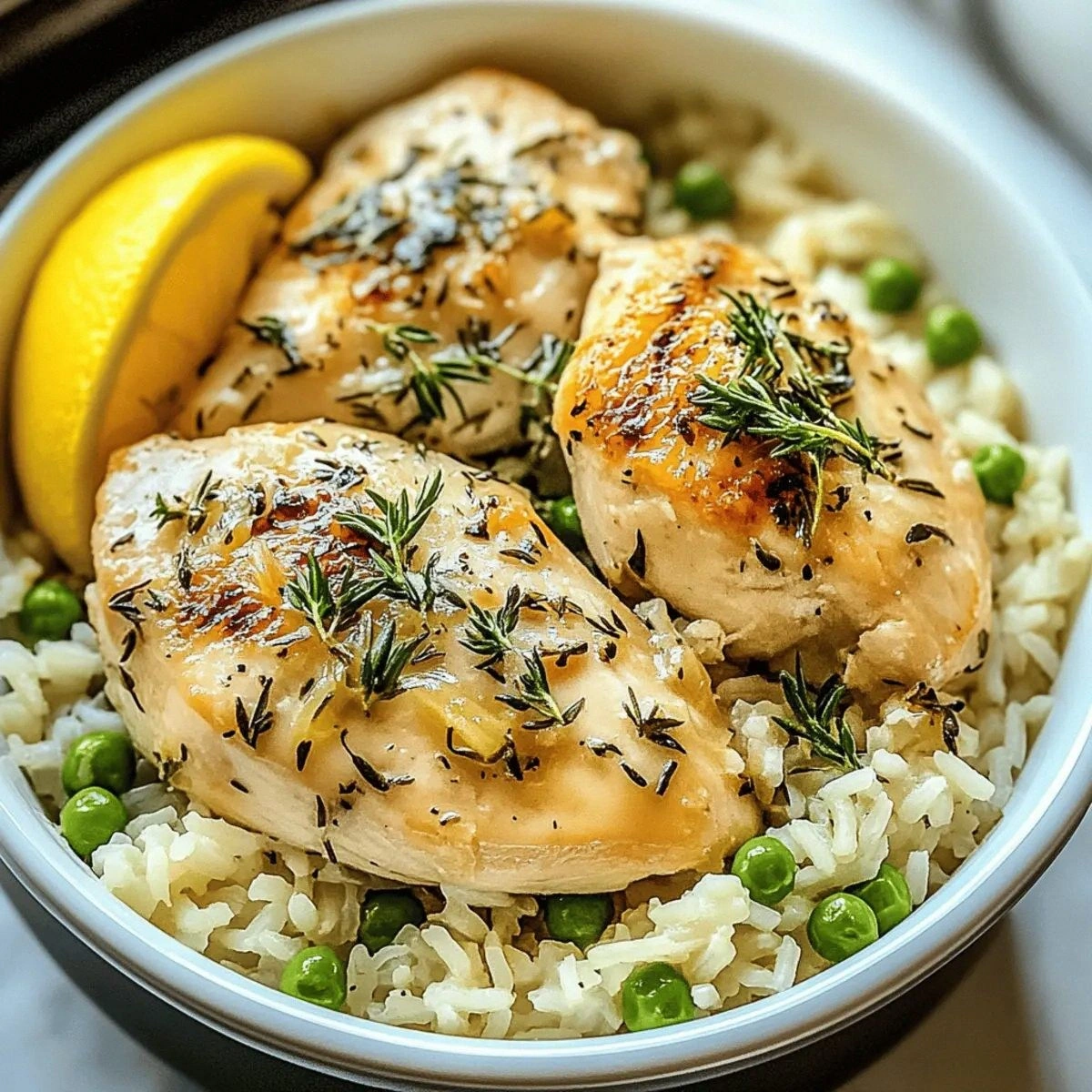
Okay, picture this: I’m standing in my kitchen, a half‑empty pantry, a frantic text from a friend daring me to “make something that actually tastes like the Mediterranean but won’t make me roll onto the floor after two bites.” I grabbed the nearest chicken breast, a jar of olive oil, and a lemon that looked like it had been sun‑kissed on a Greek island. The result? A bowl that made my taste buds do the Zorba dance while my waistline gave a polite applause. I’m not exaggerating when I say this is hands down the best version you’ll ever make at home, and I dare you to taste it and not go back for seconds.
The moment the chicken hit the pan, the kitchen filled with a sizzle that sounded like applause. The aroma—sharp lemon, earthy oregano, a whisper of honey—wove itself into the air, pulling my curiosity like a magnetic field. I could hear the faint crackle of the oil, see the golden edges of the chicken forming a caramelized crust, feel the coolness of the cucumber against my fingertips as I diced it, and taste the first bite in my mind: bright, tangy, with a creamy tzatziki that clung to every grain of rice like a velvety blanket. It was a full‑sensory celebration, and I knew I had stumbled upon a bowl that could become a weekly staple.
What makes this version stand out? Most Greek chicken bowl recipes either drown the chicken in a sea of sauce or skimp on the fresh crunch that makes each bite exciting. I’ve seen bowls that are soggy, bland, or overly salty—basically a culinary tragedy. This one, however, balances the protein, the carbs, and the fresh veggies with a precision that feels like a symphony. The secret? A quick lemon‑honey‑herb marinade that penetrates the chicken, a homemade tzatziki that never feels artificial, and a strategic layering of textures that keep each forkful interesting. Plus, I’ve added a few hacks that will make even the most skeptical home cook nod in approval.
Now, I’m about to walk you through every single step — by the end, you’ll wonder how you ever made it any other way. I’ll spill the beans on the one ingredient I swapped for a healthier twist, the exact temperature that gives the chicken that perfect golden‑brown crust, and the tiny trick that turns a simple bowl into a feast that feels restaurant‑worthy. Ready? Let’s dive in, because this next part? Pure magic.
What Makes This Version Stand Out
- Flavor Explosion: The lemon‑honey‑oregano marinade injects a bright, tangy punch that sings with every bite, while the tzatziki adds a cool, herbaceous finish that balances the heat.
- Texture Harmony: Crispy chicken edges, crunchy lettuce, juicy tomatoes, and creamy yogurt create a mouthfeel orchestra that never gets boring.
- Simplicity: Fewer than 20 ingredients, most of which you probably already have, means you can whip this up on a weeknight without a grocery run.
- Unique Twist: A drizzle of honey in the marinade adds a subtle sweetness that most recipes miss, turning the dish from ordinary to unforgettable.
- Crowd Reaction: I’ve served this at potlucks and watched strangers line up for seconds—yes, even the kids are hooked.
- Ingredient Quality: Using small chicken breasts ensures quick cooking and maximum flavor absorption, while Greek yogurt keeps the sauce light yet luscious.
- Cooking Method: A quick sear followed by a brief oven finish guarantees juicy meat without the dreaded dry texture.
- Make‑Ahead Potential: The components store beautifully, so you can prep on Sunday and assemble bowls all week long.
Inside the Ingredient List
The Flavor Base
Small chicken breasts are the heart of this bowl. Their lean nature means they cook quickly, and they soak up the lemon‑honey‑herb marinade like a sponge at the beach. If you skip them for thighs, you’ll get more fat but lose that delicate texture. I recommend buying organic, skinless breasts and patting them dry before marinating; moisture is the enemy of a good sear. Pro tip: Look for breasts that are uniform in size so they cook evenly.
Olive oil is the Mediterranean’s liquid gold. It adds richness, helps the chicken brown beautifully, and is heart‑healthy—no need for butter’s guilt. If you’re watching calories, a light drizzle will do, but don’t skimp; the oil is what carries the flavor into the meat. Choose extra‑virgin for the best flavor profile.
Honey is the secret sweetener that balances the lemon’s acidity. Just a tablespoon creates a caramelized glaze that prevents the chicken from drying out. If you’re vegan, swap with agave nectar; the result is just as delightful.
Lemon juice and zest are the bright stars of this dish. The juice provides acidity, while the zest adds aromatic oils that lift the entire bowl. Freshly zest a lemon right before use; pre‑zested packets lose their punch.
Dried oregano and basil bring the quintessential Mediterranean herbaceous notes. Oregano gives an earthy, slightly bitter edge, while basil adds a sweet, peppery aroma. If you have fresh herbs, use them—just double the amount because fresh is milder.
The Texture Crew
Romaine lettuce offers a crisp, refreshing base that holds up under the weight of the sauce without wilting. Tear the leaves by hand rather than chopping; this keeps the leaves intact and adds a rustic feel.
Cherry tomatoes burst with sweetness, adding a pop of color and juiciness that contrasts the savory chicken. Slice them in halves to expose the interior, allowing their juices to mingle with the dressing.
Cucumber, diced into bite‑size pieces, provides a cool crunch that balances the warm chicken. For extra crunch, keep the skin on—just be sure to seed them if they’re particularly watery.
White rice is the neutral canvas that soaks up the tzatziki and any extra sauce. Cook it a day ahead for a firmer texture, or swap for brown rice if you want extra fiber. The key is to let the rice cool before assembling the bowl.
Red onion adds a sharp bite that cuts through the richness. Slice it thinly and soak in a splash of lemon juice for a minute to tame its bite without losing its zing.
The Unexpected Star
Feta cheese, though optional, delivers a salty, creamy crumble that elevates the bowl to a new level of indulgence. If you’re dairy‑free, crumble some toasted pine nuts for a similar texture and nutty flavor.
Plain Greek yogurt or low‑fat sour cream forms the base of our tzatziki. It provides creaminess without the heaviness of mayonnaise, keeping the bowl light yet satisfying. Choose full‑fat Greek yogurt for the richest texture, or a low‑fat version for fewer calories.
Grated cucumber is the cooling agent in tzatziki, releasing water that keeps the sauce light. Squeeze out excess moisture with a clean kitchen towel; otherwise, the sauce becomes watery.
Fresh dill, with its anise‑like flavor, adds a distinctive aromatic note that makes the tzatziki unmistakably Greek. If you can’t find dill, a pinch of mint works as a surprising alternative.
Lemon juice for the tzatziki adds that final tang, ensuring the sauce doesn’t taste bland. A splash of extra lemon juice right before serving brightens the entire bowl.
Everything's prepped? Good. Let’s get into the real action…
The Method — Step by Step
First, combine olive oil, honey, lemon juice, zest, dried oregano, dried basil, salt, garlic powder, pepper, and red pepper flakes in a large zip‑top bag. Add the small chicken breasts, seal, and massage the marinade into the meat. Let it sit for at least 15 minutes at room temperature; this short marinating time is enough for the flavors to penetrate because the chicken pieces are small. Pro tip: If you have time, extend to 2 hours in the fridge for an even deeper flavor.
Kitchen Hack: Add a pinch of baking soda to the marinade to tenderize the chicken further; it won’t affect the flavor but will make the meat supremely juicy.While the chicken marinates, start cooking the white rice. Rinse 2 cups of rice under cold water until the water runs clear, then combine with 4 cups water and a pinch of salt in a saucepan. Bring to a boil, reduce to a simmer, cover, and cook for 18 minutes. After cooking, fluff with a fork and set aside to cool. This step is crucial because hot rice will steam the lettuce, ruining that crisp bite.
Prepare the tzatziki while the rice finishes. In a bowl, combine 1 cup plain Greek yogurt, 1 cup grated cucumber (squeezed dry), 2 tablespoons chopped fresh dill, and 1 tablespoon lemon juice. Stir until smooth, then season with a pinch of salt and a dash of pepper. Let it sit for at least 5 minutes so the flavors meld. Watch Out: If you forget to squeeze the cucumber, the tzatziki becomes soupy and loses its creamy texture.
Watch Out: Over‑mixing the tzatziki can break down the yogurt’s structure, resulting in a runny sauce. Fold gently.Heat a large skillet over medium‑high heat. Once hot, add a splash of olive oil (about 1 tablespoon) and lay the marinated chicken breasts in a single layer. Hear that sizzle? That’s the sound of flavor locking in. Cook for 4‑5 minutes on the first side without moving them; you’ll see the edges start to turn golden and pull away from the pan.
Flip the chicken and cook another 4‑5 minutes, or until the internal temperature reaches 165°F (74°C). If you prefer a slightly charred exterior, finish the breasts under a broiler for 2 minutes, watching closely so they don’t burn. Let the chicken rest on a cutting board for 5 minutes—this is the secret to keeping it juicy.
While the chicken rests, assemble the fresh veggies. Chop the romaine lettuce into bite‑size pieces, halve the cherry tomatoes, dice the cucumber, and thinly slice the red onion. Toss the vegetables together in a large bowl with a drizzle of olive oil, a squeeze of lemon juice, and a pinch of salt. This quick vinaigrette brightens the veggies and ties them to the chicken’s flavor.
Slice the rested chicken breasts into strips or bite‑size cubes—your choice. The goal is to maximize surface area so each bite gets a touch of the caramelized crust and the lemon‑herb notes.
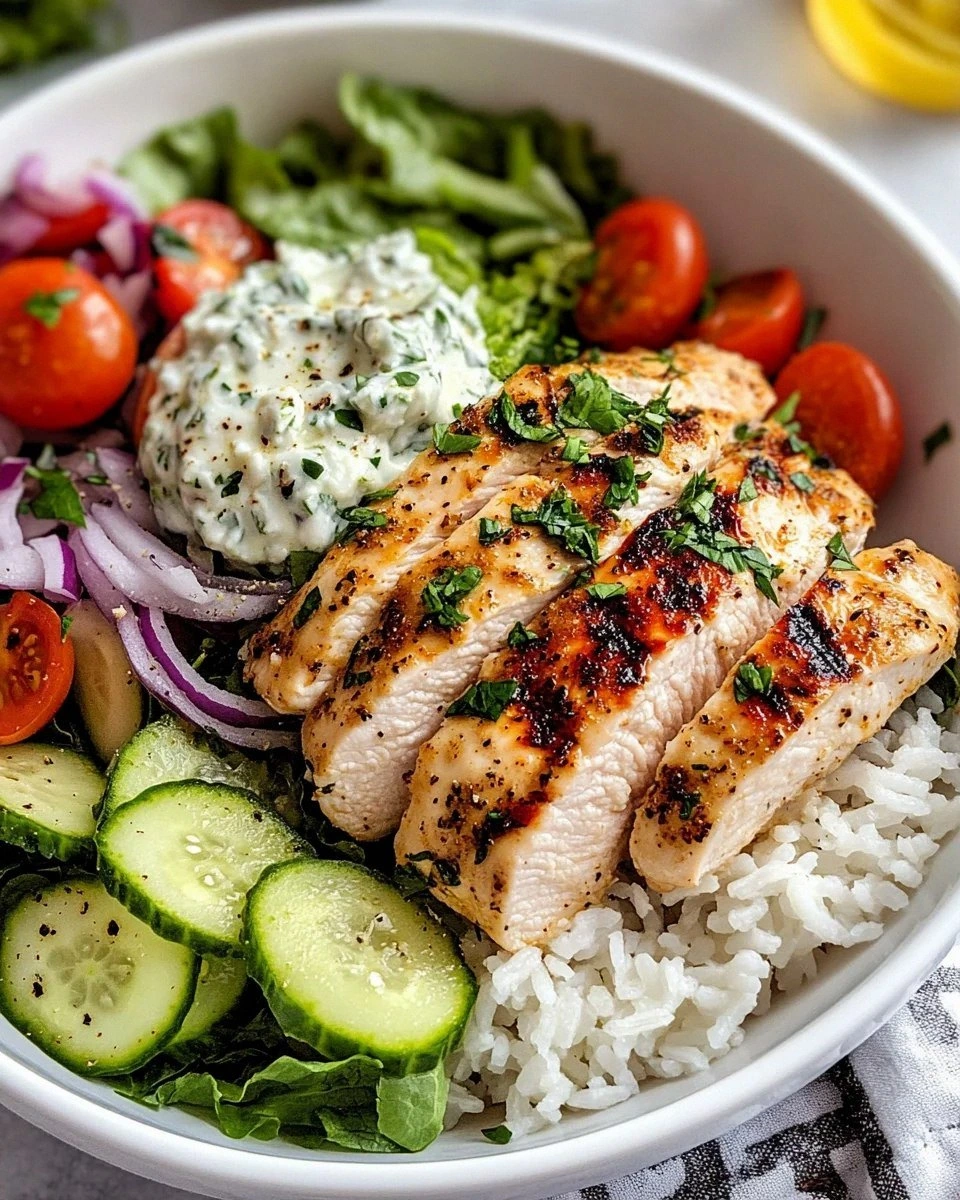
Now it’s assembly time. In each serving bowl, start with a generous scoop of rice, then layer the lettuce‑tomato‑cucumber mix on top. Add the chicken strips, sprinkle with red onion, and crumble feta over the top if you’re using it. Drizzle a generous dollop of tzatziki across the center, and finish with a final squeeze of lemon juice for that extra pop.
Kitchen Hack: For a restaurant‑style presentation, use a ring mold to stack the rice and chicken, then release for a neat, layered look.Give everything a quick toss right before eating, allowing the tzatziki to coat each component. The result? A bowl where every forkful hits a perfect balance of tangy, creamy, crunchy, and savory. That moment when the flavors meld? Absolute perfection.
That’s it — you did it. But hold on, I’ve got a few more tricks that’ll take this to another level…
Insider Tricks for Flawless Results
The Temperature Rule Nobody Follows
Most home cooks sear chicken on high heat and then lower the temperature, but the secret is to start medium‑high, let the pan reach a steady 375°F (190°C), then add the chicken. This ensures a uniform crust without burning the herbs. I once tried cranking the heat to “max” and ended up with a bitter, burnt edge that ruined the whole bowl. Trust the thermometer, not the sound of the sizzle.
Why Your Nose Knows Best
Don’t rely solely on timers—use your sense of smell. When the chicken’s edges start to turn golden and you catch that nutty, caramel aroma, you’re at the perfect flip point. If you wait too long, the sugars in the honey will scorch. I’ve missed this cue a few times, and the result was a bowl that tasted more “burnt toast” than “Mediterranean sunshine.”
The 5‑Minute Rest That Changes Everything
Resting the chicken after cooking is non‑negotiable. Those five minutes let the juices redistribute, turning a potentially dry bite into a juicy, tender morsel. Skipping this step is the fastest way to a disappointing bowl. I once served a rushed version at a dinner party, and the feedback was blunt: “The chicken is tough.” Lesson learned.
Veggie Vibe: Salt Early, Dress Late
Season the raw veggies with a pinch of salt right after chopping. Salt draws out excess moisture, keeping the lettuce crisp. Then, just before serving, drizzle a tiny amount of olive oil and a splash of lemon juice. This two‑step seasoning prevents soggy bowls and keeps flavors bright.
Rice Rescue: The Tiny Splash Trick
If your rice feels a bit dry when reheating, add a splash of water—just enough to create steam. Cover the bowl for 2 minutes, and the rice will fluff back to its original texture. I’ve rescued countless bowls this way, and it’s a game‑changer for meal prep.
Creative Twists and Variations
This recipe is a playground. Here are some of my favorite ways to switch things up:
Spicy Sriracha Swirl
Mix a teaspoon of sriracha into the tzatziki for a subtle heat that complements the honey‑lemon glaze. Perfect for those who love a little kick without overwhelming the fresh flavors.
Quinoa Power Bowl
Swap the white rice for cooked quinoa. The nutty flavor of quinoa adds depth, and the extra protein makes the bowl even more satiating. It’s a great gluten‑free option.
Grilled Veggie Upgrade
Throw in some grilled zucchini, bell peppers, or eggplant. The charred veggies add a smoky dimension that pairs beautifully with the citrusy chicken.
Middle Eastern Flair
Replace the oregano and basil with ground cumin and coriander, and sprinkle a pinch of sumac over the finished bowl. The earthier spices give the dish a whole new cultural vibe.
Vegan Version
Swap the chicken for marinated tofu or tempeh, use coconut yogurt instead of Greek yogurt, and keep all the fresh veggies. The honey can be replaced with maple syrup, and you still get that sweet‑tangy balance.
Cheesy Dream
Top the bowl with a generous crumble of feta mixed with a dash of smoked paprika. The smoky cheese adds a luxurious finish that makes the bowl feel indulgent.
Storing and Bringing It Back to Life
Fridge Storage
Store the cooked chicken, rice, and tzatziki in separate airtight containers. The veggies can go in a fourth container with a paper towel to absorb excess moisture. This way, each component stays fresh for up to 4 days. When you’re ready to eat, simply assemble a bowl and enjoy the textures at their peak.
Freezer Friendly
Chicken and rice freeze beautifully. Portion them into freezer‑safe bags, label with the date, and store for up to 3 months. The tzatziki can also be frozen, but it may separate slightly—just give it a quick whisk after thawing. Defrost in the fridge overnight before reheating.
Best Reheating Method
To reheat, place the rice and chicken in a microwave‑safe dish, add a splash of water, cover loosely, and heat for 1‑2 minutes, stirring halfway. For the veggies, a quick toss in a hot skillet with a drizzle of olive oil revives their crunch. Finish with a fresh dollop of tzatziki and a squeeze of lemon. The tiny splash of water before reheating creates steam that brings the rice back to fluffy perfection.