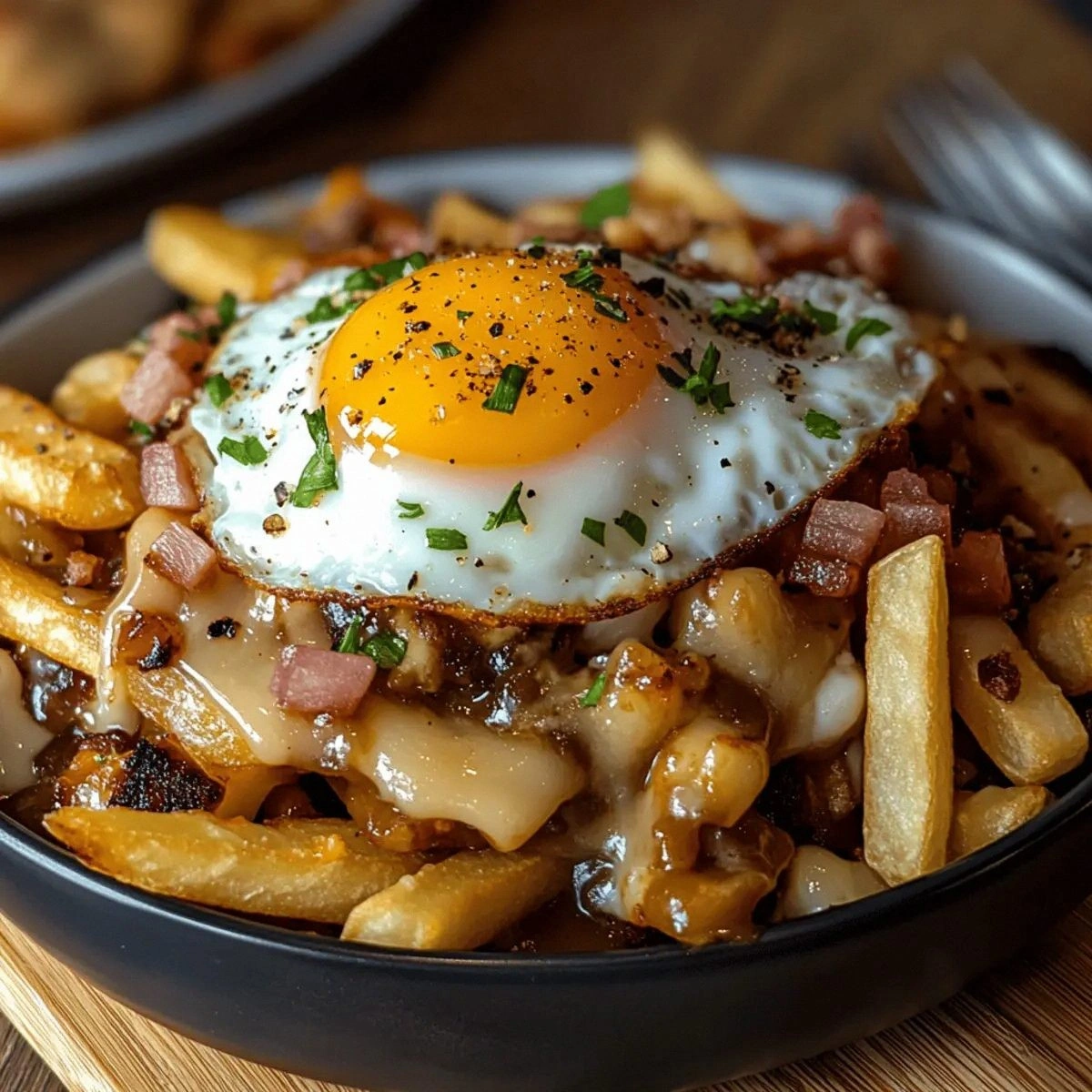
Okay, picture this: it’s a rainy Saturday morning, the kind where the clouds look like someone pressed a giant cotton ball against the sky and the only thing that can break the monotony is a plate that screams comfort louder than a karaoke night. I was half‑asleep, half‑hungry, and my fridge was giving me the cold shoulder—just a sad wilted lettuce leaf and a lonely bag of frozen fries. I dared a friend to a breakfast showdown, and the loser had to bring coffee for a week. Spoiler alert: I lost, but I also invented the most decadent breakfast poutine you’ll ever lay eyes on.
The moment I tossed those golden‑crisp potatoes onto the pan, the kitchen filled with a buttery perfume that made the whole house feel like a French‑Canadian diner on a Sunday morning. The sizzle was like a tiny fireworks show, each pop promising a crunchy bite that would later melt into a velvety gravy. Then came the cheese curds—those little nuggets of squeaky joy that stretch like a rubber band in the best possible way. I swear I heard the curds whisper, “We’re about to get saucy, baby.”
But the real game‑changer? A perfectly runny fried egg perched on top, its yolk turning the whole thing into a sunrise in a bowl. Imagine the yolk as liquid gold, spilling over the fries, the cheese, the gravy—an edible sunrise that says, “Good morning, world!” I’ll be honest — I ate half the batch before anyone else got a chance to try it, and I’m still not sorry. This version stands out because it respects the classic poutine roots while cranking the breakfast factor up to eleven.
Now, I’m about to spill the beans (and the butter, and the stock) on a technique that most recipes completely miss: a quick roux that coats each fry like a silky blanket, ensuring every bite is uniformly luscious. I dare you to taste this and not go back for seconds. Let me walk you through every single step — by the end, you’ll wonder how you ever made it any other way.
What Makes This Version Stand Out
- Texture: The fries stay crisp underneath a glossy gravy that doesn’t soggy them, creating a delightful contrast that feels like biting into a crunchy‑soft duet.
- Flavor: The combination of beef stock, butter, and a dash of pepper builds a deep, umami‑rich gravy that sings louder than any fast‑food version.
- Cheese: Fresh cheese curds bring that iconic squeak, a sensory cue that tells you this isn’t a knock‑off.
- Egg: A sunny‑side‑up egg crowns the dish, its runny yolk acting as a silky sauce that melds everything together.
- Simplicity: Only seven core ingredients, yet each one is treated like a star, making the recipe approachable for any home cook.
- Versatility: Swap beef stock for chicken, add a dash of smoked paprika, or even throw in some crispy bacon for a personalized twist.
- Crowd‑pleaser: This dish turns skeptics into believers; I’ve seen brunch crowds line up for seconds, and that’s a promise.
- Make‑Ahead Potential: The gravy can be prepared ahead and reheated, while the fries stay fresh when baked just before serving.
Inside the Ingredient List
The Flavor Base
The backbone of any great poutine is its gravy, and here we rely on beef or chicken stock paired with butter and flour to form a roux. The stock provides depth, while the butter adds richness that coats each fry like velvet. If you skip the roux, you’ll end up with a watery sauce that slides off the fries—trust me, I’ve learned that the hard way. For a richer flavor, choose a low‑sodium stock and add a splash of Worcestershire sauce at the end.
The Texture Crew
Potatoes are the heroes, and their preparation dictates the final crunch. I recommend using medium Yukon Golds; their buttery interior stays fluffy while the skin crisps up beautifully. Cutting them into uniform sticks ensures even cooking, preventing some pieces from turning into mush while others remain rock‑hard. If you can’t find Yukon Golds, Russet potatoes work fine—just give them a quick soak in cold water to remove excess starch.
The Unexpected Star
Cheese curds are the unsung champions of poutine, delivering that signature squeak that says, “I’m authentic.” Fresh curds melt just enough to become gooey without losing their shape, unlike shredded cheese which can become a greasy blanket. If you’re in a pinch, you can use mozzarella pearls, but the texture will be different. When buying, look for curds that are still slightly firm and cold; they’ll hold up better under the hot gravy.
The Final Flourish
Eggs aren’t just a garnish; they’re the finishing touch that turns breakfast poutine into a complete meal. A perfectly fried egg with a runny yolk acts as an additional sauce, binding the gravy and cheese into a single, luscious bite. If you prefer a firmer yolk, simply lower the heat and cover the pan for a minute, but I guarantee you’ll miss the molten gold that makes this dish unforgettable. Season the egg with a pinch of salt and pepper right before it hits the plate.
Everything's prepped? Good. Let's get into the real action...
The Method — Step by Step
- Prep the potatoes. Peel (optional) and cut the potatoes into 1‑inch sticks. Rinse them under cold water, then pat dry with a kitchen towel. I dare you to skip the drying step and see how soggy your fries become—trust me, it’s a disaster. Toss the sticks with a tablespoon of melted butter and a pinch of salt; this thin coating helps them brown evenly. Let them rest while you heat the oil; the rest period lets the surface dry further, guaranteeing that satisfying crunch.
- First fry (blanch). Heat 2 inches of oil to 300°F (150°C). Fry the potatoes in batches for 3‑4 minutes—just until they’re tender inside but still pale. They should float lazily, and you’ll hear a soft hiss, not a roar. Remove with a slotted spoon and drain on paper towels. This step builds a fluffy interior, a secret most recipes overlook.
- Make the roux. In a saucepan, melt 4 tablespoons of butter over medium heat. Sprinkle in 1/4 cup all‑purpose flour, whisking continuously for 2 minutes until the mixture turns a light caramel color and smells nutty. This is the foundation of your gravy; if you let it burn, the whole dish will taste bitter, so keep a close eye. Add 2 cups beef or chicken stock gradually, whisking to avoid lumps. Bring to a simmer; the sauce should thicken enough to coat the back of a spoon, glossy and velvety.
- Second fry (crisp). Increase oil temperature to 375°F (190°C). Return the blanched potatoes to the oil for a second 2‑3 minute fry until golden brown and crisp. You’ll hear a satisfying crackle—That sizzle when it hits the pan? Absolute perfection. Drain again on fresh paper towels and sprinkle with a pinch more salt while still hot.
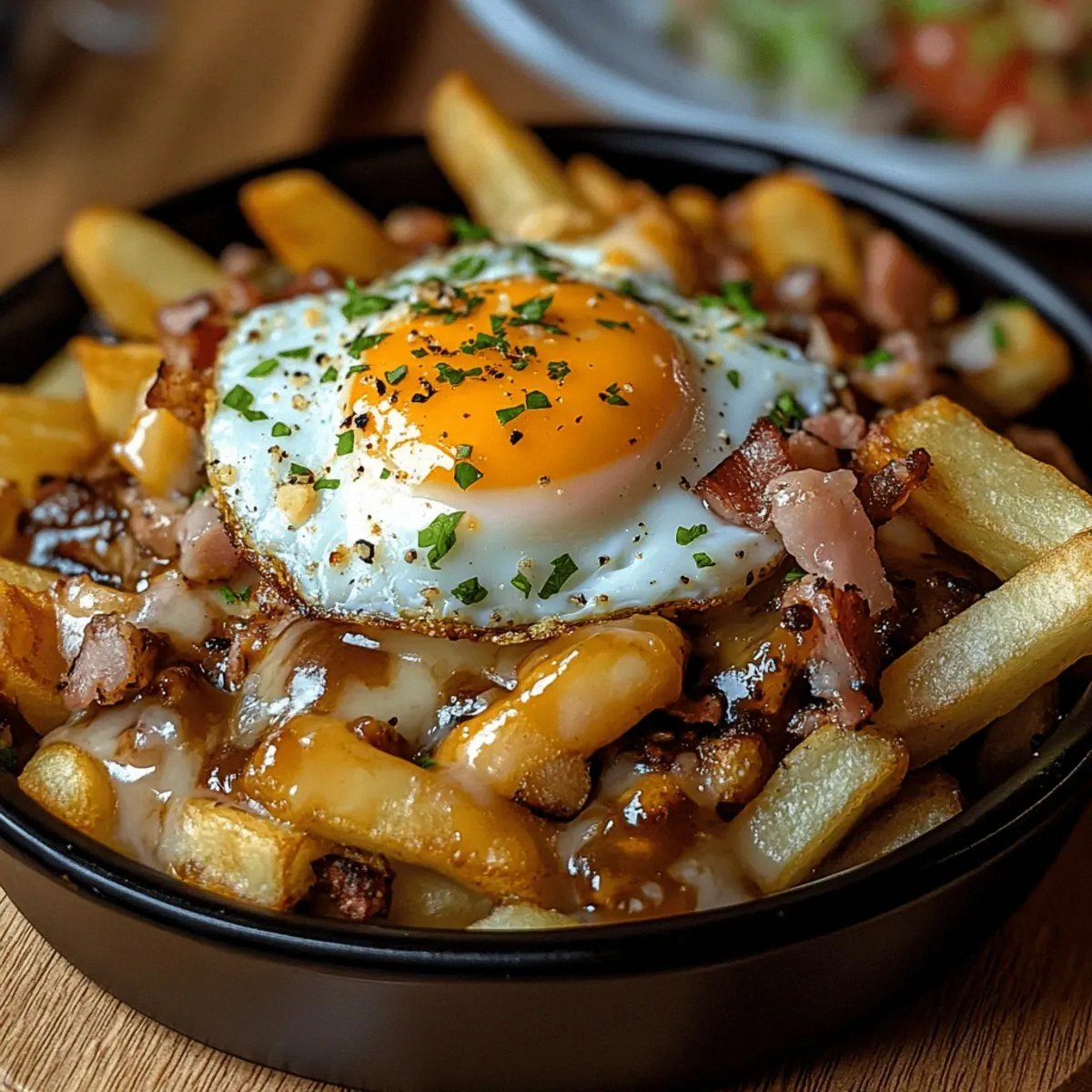
- Assemble the base. Spread the hot fries on a large, shallow serving dish. Sprinkle 2 cups of cheese curds over the fries while they’re still steaming; the heat will begin to melt the curds, creating those glorious stretchy strands. Pour the hot gravy evenly, ensuring each fry is drenched. The gravy should pool slightly, creating a glossy river that glistens under the kitchen lights.
- Fry the eggs. In a non‑stick skillet, melt a dab of butter over medium‑low heat. Crack the 4 large eggs one at a time, being careful not to break the yolks. Cook until the whites are set but the yolks remain runny—about 2‑3 minutes. Season with a pinch of salt and pepper. This step is the climax; the yolk will become the golden sunrise that ties everything together.
- Finish and serve. Place the fried eggs on top of the assembled poutine, spacing them evenly. The moment you cut into the yolk, it will cascade over the cheese and fries, turning the whole plate into a glossy, buttery masterpiece. Serve immediately, because the fries lose their crunch within minutes. Picture yourself pulling this out of the oven, the whole kitchen smelling incredible, and the first bite delivering a symphony of crunch, melt, and silk.
That's it — you did it. But hold on, I've got a few more tricks that'll take this to another level. Stay with me here — this is worth it.
Insider Tricks for Flawless Results
The Temperature Rule Nobody Follows
Never fry at a single temperature; the two‑step fry method is the secret sauce of professional kitchens. The first low‑temp fry cooks the interior without browning, while the second high‑temp blast creates that coveted crunch. I once tried a one‑step fry and ended up with limp fries that tasted like soggy cardboard. Trust the process, and your fries will stay crisp even after the gravy hits them.
Why Your Nose Knows Best
Your sense of smell is a far better indicator of doneness than a timer when it comes to the roux. When the butter‑flour mixture turns a light amber and you catch that nutty, toasted scent, you know the flavor base is ready. If you rely solely on minutes, you might end up with a pale, flavorless gravy. So, trust that nose of yours—if it smells like toasted almonds, you’re golden.
The 5‑Minute Rest That Changes Everything
After the second fry, let the fries rest for exactly five minutes before adding the gravy. This short pause lets the steam escape, preventing the fries from becoming soggy when the hot sauce hits. I once skipped this rest and the fries turned into a mushy mess; lesson learned. Use a cooling rack to keep them airy, and you’ll preserve that crunch right up to the last bite.
Seasoning Layers, Not Just Salt
Season each component individually. Lightly salt the potatoes before frying, season the gravy with a pinch of pepper and a dash of smoked paprika, and finish the eggs with flaky sea salt. This layering builds depth, ensuring every bite hits multiple flavor notes. If you only salt at the end, the flavors will feel flat and one‑dimensional.
Cheese Curds Storage Trick
If you buy cheese curds in bulk, store them in an airtight container with a paper towel to absorb excess moisture. This keeps them squeaky for up to a week. I’ve seen curds go rubbery when left in a damp bag, ruining the texture. The paper towel trick is a lifesaver for anyone who loves poutine as much as I do.
Creative Twists and Variations
This recipe is a playground. Here are some of my favorite ways to switch things up:
Maple‑Bacon Bliss
Crisp up some bacon, crumble it, and drizzle a light maple syrup over the assembled poutine. The sweet‑savory combo elevates the dish to brunch royalty, perfect for a lazy Sunday.
Spicy Chipotle Kick
Add a teaspoon of chipotle in adobo to the gravy and sprinkle pickled jalapeños on top. The smoky heat cuts through the richness, delivering a bold flavor that will wake up even the deepest sleepers.
Veggie Power
Swap half the potatoes for sweet potato wedges and add sautéed mushrooms. The earthy mushrooms complement the beef stock, while the sweet potatoes bring a subtle caramel note.
Herb‑Infused Gravy
Stir in fresh thyme and rosemary while the gravy simmers. The herbs add a fragrant lift that makes the dish feel more sophisticated without extra effort.
Cheesy Overload
Mix in a handful of shredded sharp cheddar with the cheese curds. The cheddar melts into a gooey blanket, while the curds keep that iconic squeak.
Storing and Bringing It Back to Life
Fridge Storage
Separate the components: store fries in an airtight container lined with paper towels, gravy in a sealed jar, and cheese curds in a zip‑top bag. They’ll keep for up to 3 days. When ready to reassemble, reheat the gravy on low and give the fries a quick 2‑minute blast in a hot oven (425°F) to revive the crunch.
Freezer Friendly
Freeze the cooked fries on a parchment sheet before transferring them to a freezer bag—this prevents them from clumping. The gravy can be frozen in a portion‑size container. Thaw in the fridge overnight, then reheat as described above. The dish maintains its flavor, and you’ll have a ready‑to‑go breakfast for busy mornings.
Best Reheating Method
When reheating, add a tiny splash of water or stock to the gravy; this creates steam that revives its silkiness. For the fries, a quick toss in a hot skillet with a drizzle of oil restores the crunch without drying them out. Assemble, fry the eggs fresh, and you’ve got a “just‑made” experience even from leftovers.