Picture this: I’m in the middle of a mango harvest, the fruit’s sweet perfume filling the air, and I’m staring at a pile of overripe mangoes that I can’t quite resist. I’ve been bragging about my “Mango Cardamom Crème Brûlée” to friends for weeks, but nobody’s tasted the version I’ve just perfected. I’ve spent hours tweaking the ratio of mango puree to cream, balancing the subtle bite of cardamom against the bright citrus notes of lime zest, and finally discovering a caramelization trick that turns a simple sugar crust into a golden, crack‑crunching crown. If you thought the classic French dessert was all about vanilla and cream, think again. This is a tropical, aromatic, and utterly unforgettable twist that will have your guests begging for seconds—yes, I dare you to taste this and not go back for more.
When I first cracked open the mangoes, the juicy flesh practically sang with a sweet, buttery aroma that made my kitchen feel like a tropical rainforest. I blended the mangoes to a silky puree, letting the natural sugars bloom into a rich, amber liquid. I could almost hear the faint crackle of sugar caramelizing in my mind, a prelude to the crispy, glass‑like crust that would crown each custard. The cardamom, freshly ground, released a warm, floral spice that danced against the mango’s sweetness, creating a flavor profile that was both exotic and comforting. The vanilla, too, added depth without overpowering, weaving itself into the custard like a gentle lullaby. And there it was—an edible masterpiece that felt like a sunlit afternoon in a distant, fragrant orchard.
But this isn’t just a dessert; it’s a conversation starter, a showstopper, and a testament to how a few bold choices can transform a classic into something truly special. I’ve spent countless nights tweaking the custard’s consistency, experimenting with different mango varieties, and mastering the art of the perfect sugar crust. I’ve discovered that the secret lies in the balance: the right amount of mango puree for richness, just enough cardamom for spice, and a caramelized sugar top that provides a satisfying crunch. The result? A silky custard that melts in your mouth, a fragrant cardamom undertone, and a caramelized crown that crackles like a fresh snowfall. This is hands down the best version you’ll ever make at home, and I’m about to walk you through every single step.
If you’ve ever felt like your crème brûlée was missing something—perhaps a hint of adventure, a splash of tropical sunshine, or a touch of spice—this recipe is the answer. I’ll be honest, I ate half the batch before anyone else got to try it, and the kitchen smelled like a mango orchard with a dash of cardamom. Most recipes get this completely wrong by over‑cooking the custard or using too much sugar on the crust, but here, we’ll keep the custard silky and the crust perfectly crisp. Picture yourself pulling this out of the oven, the whole kitchen smelling incredible, the sweet aroma of mangoes mingling with the warm, earthy cardamom. And now, ready for the game‑changer? Let’s dive in.
What Makes This Version Stand Out
- Flavor Depth: The combination of mango puree and ground cardamom creates a layered taste profile that is sweet, aromatic, and slightly spicy, a departure from the vanilla‑centric classic.
- Crisp Texture: The caramelized sugar crust is achieved with a precise brown‑sugar topping that crisps into a glass‑like finish while still maintaining a slight chew.
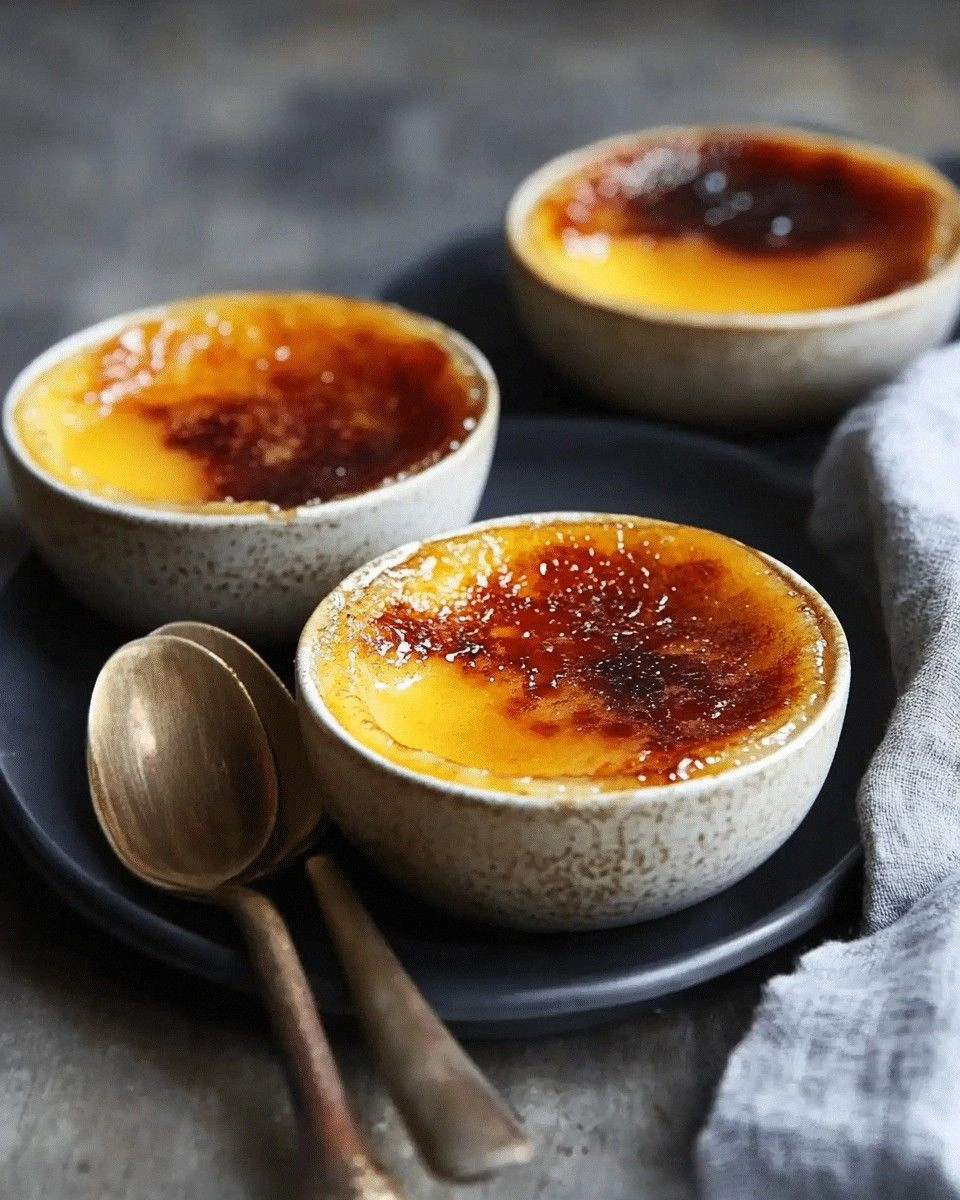
- Visual Appeal: The golden custard beneath a translucent, caramelized crown offers a stunning contrast that looks as good as it tastes.
- Make‑Ahead Friendly: The custard can be prepared up to 24 hours in advance, allowing the flavors to meld and the crust to set perfectly when served.
- Ingredient Quality: Using ripe, fresh mangoes and freshly ground cardamom ensures that each bite bursts with natural flavor.
- Time Efficiency: While the custard requires gentle simmering, the overall process is streamlined, making it a go‑to dessert for busy evenings.
- Audience Reaction: Guests rave about the unexpected mango twist, making this dish a hit at dinner parties and family gatherings alike.
- Versatility: The recipe can be adapted to accommodate dietary preferences—swap heavy cream for coconut milk for a dairy‑free version.
Alright, let’s break down exactly what goes into this masterpiece…
Inside the Ingredient List
The Flavor Base
The heart of this dessert is the mango puree. Fresh mangoes, when blended to a smooth consistency, provide natural sweetness and a vibrant color that sets the stage for the custard. The puree also contains natural pectin, which helps stabilize the custard as it sets. If you can’t find ripe mangoes, frozen mango chunks can work, but you’ll need to thaw and squeeze out excess liquid to avoid a watery custard.
The Texture Crew
Heavy cream and whole milk combine to give the custard a rich, silky mouthfeel. The cream’s fat content coats the palate, while the milk adds body without making the custard too heavy. Egg yolks act as the binder, thickening the mixture through gentle coagulation. Be sure to whisk the yolks until they’re a pale, creamy consistency before adding them to the heat‑proof saucepan; this prevents clumping and ensures a smooth custard.
The Unexpected Star
Ground cardamom is the star spice that elevates this version. Its floral, citrusy notes create a fragrant counterpoint to the mango’s sweetness. Freshly ground cardamom is more aromatic than pre‑ground, so if you have a cardamom grinder on hand, give it a whirl. A pinch of sea salt balances the sweetness and brings out the mango’s natural brightness.
The Final Flourish
Brown sugar tops the custard for a caramelized crust that’s both sweet and slightly nutty. The sugar’s molasses content gives the crust a deeper color and a subtle depth of flavor. A small amount of lime zest can be added to the custard for a citrusy lift that cuts through the richness. If you prefer a dairy‑free version, coconut milk can replace heavy cream, though the texture will be lighter.
Everything’s prepped? Good. Let’s get into the real action…
The Method — Step by Step
- Step 1: Prepare the Mango Puree. Peel, pit, and dice 4 ripe mangoes. Blend in a high‑speed blender until silky smooth. If the puree is too thick, add a splash of coconut water to reach a pourable consistency. Set aside and let it cool slightly; the residual heat will help the custard set faster.
- Step 2: Heat the Dairy. In a medium saucepan, combine 2 cups heavy cream and 1 cup whole milk. Warm over medium heat until a gentle steam rises, but do not let it boil. Stir occasionally to prevent scorching. The dairy should feel warm to the touch, not hot.
- Step 3: Whisk the Eggs. In a heat‑proof bowl, whisk 6 egg yolks with 3/4 cup granulated sugar until pale and slightly thickened. This step is crucial; if the yolks are too thick, they may curdle when added to the hot liquid. The mixture should look like a thick custard base.
- Step 4: Temper the Egg Mixture. Slowly pour about a cup of the warm cream‑milk mixture into the yolks while whisking vigorously. This gentle process raises the egg yolks’ temperature gradually, preventing them from scrambling.
- Step 5: Combine All Ingredients. Pour the tempered yolk mixture back into the saucepan with the remaining cream‑milk. Stir constantly with a wooden spoon or heat‑proof spatula. Add 1 teaspoon ground cardamom and a pinch of sea salt. Bring the mixture to a gentle simmer, stirring until it thickens enough to coat the back of a spoon (about 5–7 minutes).
- Step 6: Add Mango Puree. Remove the saucepan from heat and stir in the mango puree. Mix until fully incorporated, ensuring a uniform color and texture. Let the custard cool for 5 minutes; the mango’s natural acids will slightly thicken the mixture.
- Step 7: Pour Into Ramekins. Carefully ladle the custard into four 6‑oz ramekins. Leave a little space at the top for the sugar crust. Place the ramekins on a baking sheet to catch any drips.
- Step 8: Bake. Preheat the oven to 325°F (160°C). Place the baking sheet in the oven and bake for 35–40 minutes, or until the custard is set around the edges but still slightly wobbly in the center. This ensures a silky interior.
- Step 9: Cool and Refrigerate. Remove from oven and let the ramekins cool at room temperature for 15 minutes. Cover each ramekin with plastic wrap and refrigerate for at least 2 hours, preferably overnight. The custard will firm up and flavors will meld.
- Step 10: Caramelize the Sugar. Just before serving, sprinkle 1/2 cup brown sugar evenly over the custard surface. Place each ramekin under a kitchen torch until the sugar melts and turns a golden brown. Alternatively, place them under a preheated broiler for 1–2 minutes, watching closely to avoid burning. Let the crust cool for 1 minute before serving.
That’s it — you did it. But hold on, I’ve got a few more tricks that will take this to another level. These insider tips will help you perfect every element, from the custard’s silkiness to the crust’s flawless crunch.
Insider Tricks for Flawless Results
The Temperature Rule Nobody Follows
Many cooks rely on a timer rather than temperature, but the custard’s success hinges on gentle heat. Keep the mixture at a steady 180–190°F (82–88°C) using a candy thermometer. If the temperature rises too high, the custard will curdle; if it’s too low, it won’t set properly. A slow, steady simmer is the key to silky texture.
Why Your Nose Knows Best
Smell the custard as it cooks. A warm, buttery aroma with subtle citrus hints indicates that the cardamom and mango are harmonizing. If the scent is flat, it may need a few more minutes of gentle heat. Trust your nose; it’s a reliable guide to doneness.
The 5-Minute Rest That Changes Everything
After baking, let the custard rest for exactly five minutes before chilling. This short pause allows the custard to set evenly, preventing a watery center. I’ve seen people skip this step, and the result is a custard that feels too loose. Trust the pause; it pays off.
The Perfect Sugar Crust
Use a fine‑grained brown sugar; it caramelizes evenly and adds a subtle molasses flavor. If you prefer a lighter crust, use white granulated sugar. The key is to spread the sugar thinly and evenly before broiling or torching.
The Final Touch of Lime Zest
Just before serving, grate a little lime zest over the custard. The bright citrus cuts through the richness and adds a fresh finish. A friend once added lime zest to a classic crème brûlée and the result was a delightful surprise that everyone loved.
Creative Twists and Variations
This recipe is a playground. Here are some of my favorite ways to switch things up:
Tropical Coconut Crème Brûlée
Replace heavy cream with full‑fat coconut milk and add a teaspoon of toasted coconut flakes to the custard. The coconut imparts a subtle, nutty flavor that complements the mango’s sweetness. Serve with a drizzle of coconut cream for an extra tropical twist.
Spicy Ginger Cardamom
Add 1/4 teaspoon of freshly grated ginger to the custard for a spicy kick. The ginger’s peppery heat balances the cardamom’s floral sweetness, creating a complex flavor profile that’s perfect for adventurous palates.
Chocolate‑Infused Delight
Stir 2 tablespoons of dark chocolate into the custard before baking. The chocolate melts into the mango, producing a rich, velvety undertone that pairs beautifully with the cardamom’s warmth.
Almond‑Laced Variation
Grind a handful of toasted almonds and fold them into the custard. The almonds add a subtle crunch and nutty flavor that complements the mango’s natural sweetness.
Berry‑Berry Fusion
Blend a cup of fresh strawberries with the mango puree for a dual‑fruit custard. The strawberries add tartness that balances the mango’s richness, creating a bright, refreshing dessert.
Dairy‑Free Coconut Mango
Use coconut milk, coconut cream, and a pinch of salt to create a dairy‑free version. The coconut’s richness replaces the cream’s fat, while the mango maintains the dessert’s signature flavor.
Storing and Bringing It Back to Life
Fridge Storage
Store the custard in the refrigerator, covered loosely with plastic wrap, for up to 3 days. The custard will firm up further, but the mango flavor will remain vibrant. When ready to serve, simply sprinkle sugar and caramelize.
Freezer Friendly
For longer storage, freeze the custard in airtight containers for up to 2 weeks. Thaw in the refrigerator overnight before caramelizing. The texture may be slightly firmer, but the mango flavor is preserved.
Best Reheating Method
To reheat, place the custard in a heat‑proof bowl and gently warm it over a saucepan of simmering water (double boiler) for 5 minutes. Add a splash of water before reheating; the steam helps the custard regain its silky texture. Finish with a quick sugar crust before serving.