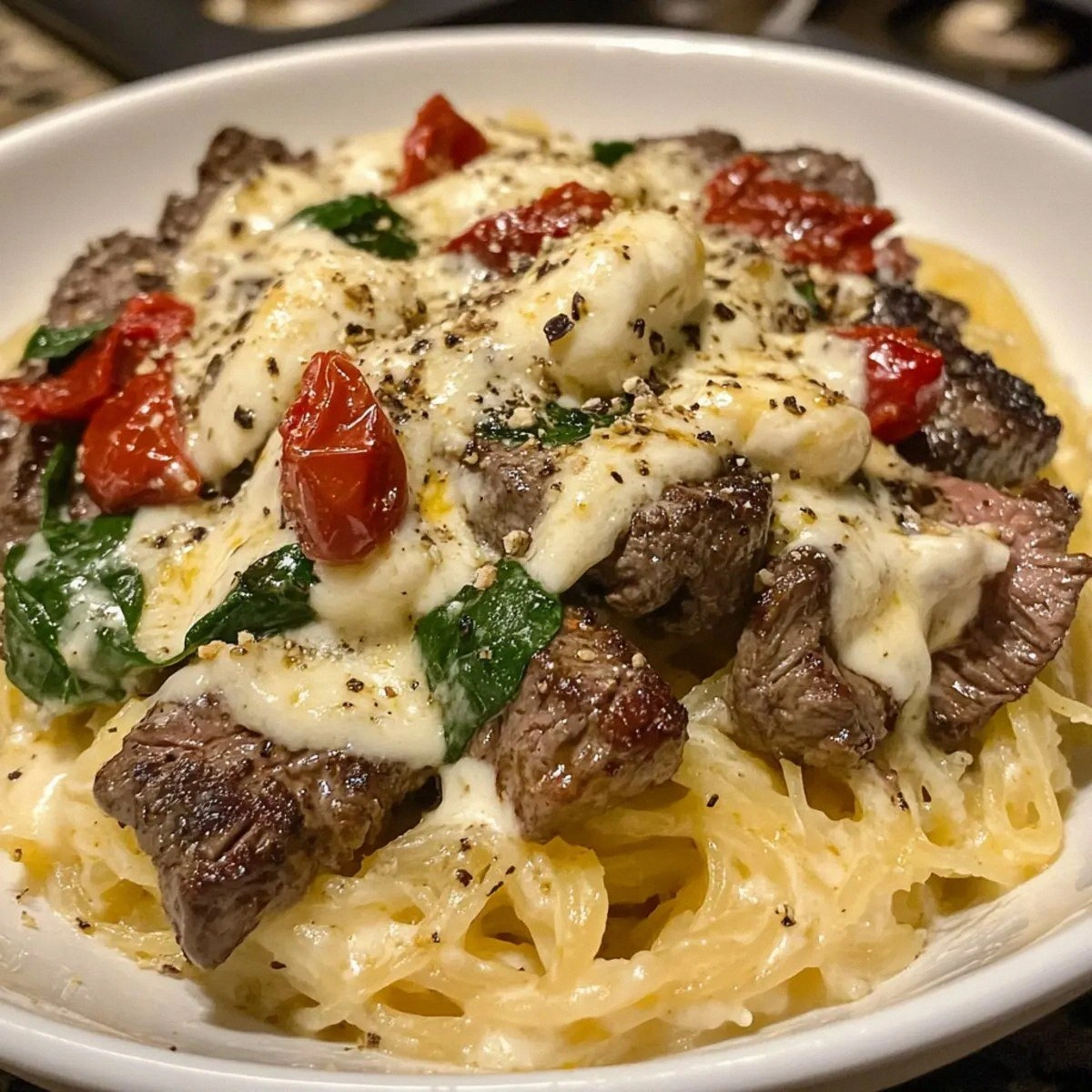
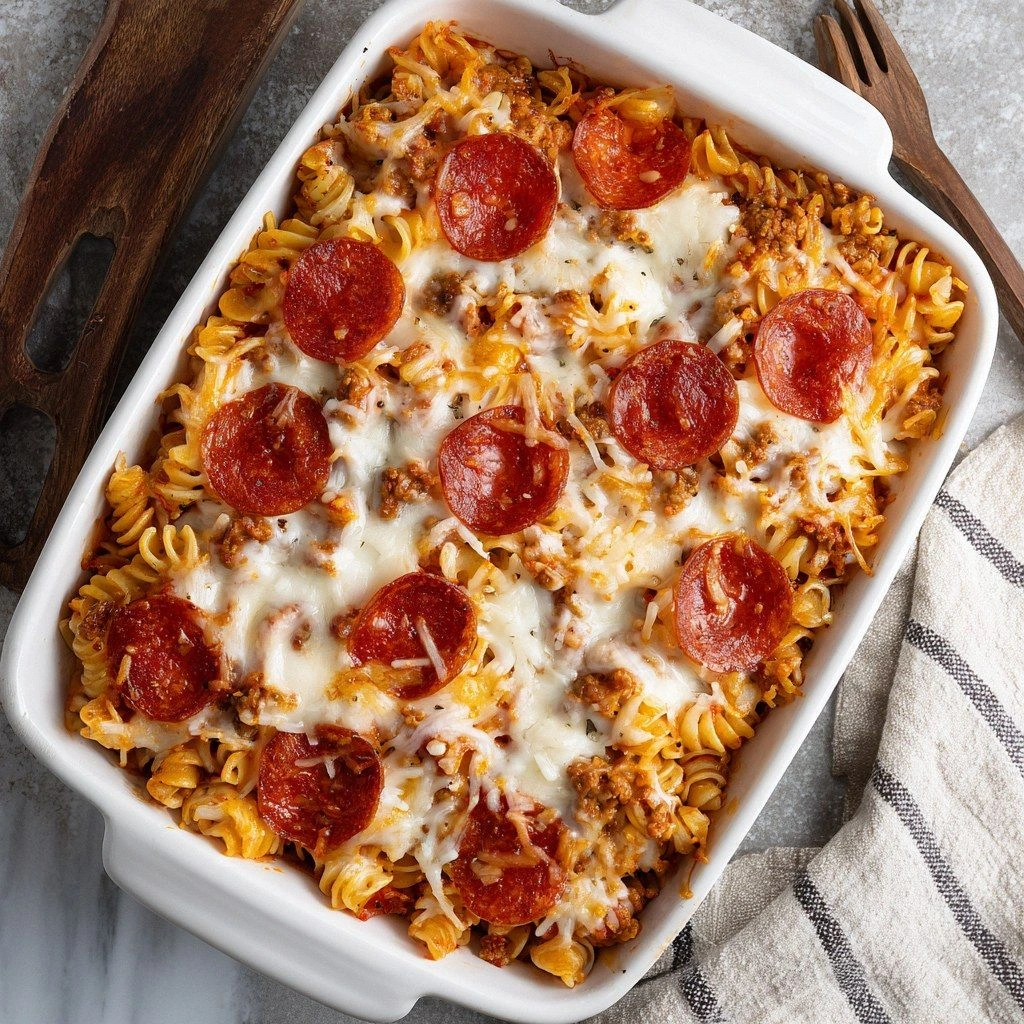
Picture this: a frantic Friday night, a stack of take‑out containers threatening to topple like a house of cards, and your fridge humming with leftovers that have seen better days. I was in a culinary bind, craving something that would feel like a pizza party and a pasta dinner rolled into one. That night, I stared at my pantry, pulled out a box of penne, a jar of pizza sauce, and a mountain of mozzarella, and decided to make a casserole that would make even the most skeptical food critic swoon. The result? A molten, cheese‑laden masterpiece that melts the heart as much as it melts the cheese.
From the first sizzling splash of olive oil to the golden crust that crackles like freshly baked dough, every sensory cue is a promise of comfort. The aroma of garlic and oregano fills the kitchen, mingling with the sharp tang of parmesan and the sweet, savory undertone of pepperoni. When you lift the lid, steam rises in a fragrant cloud, and the sight of bubbling cheese draws you closer than a siren’s call. The sound of the oven timer ticking is the soundtrack to a feast that feels both indulgent and wholesome. And the taste? It’s a symphony of tomato, cheese, and pasta that lingers on the palate like a well‑written novel.
What sets this version apart is not just the combination of ingredients, but the way each element is orchestrated. I dared you to taste this and not go back for seconds, and I’m not exaggerating—once you’ve had a bite, the idea of plain pasta is suddenly a distant memory. Most recipes get this completely wrong by under‑seasoning or over‑cooking the pasta, but I’ve found the sweet spot that keeps the noodles al dente while letting the sauce seep into every crevice. The cheese layers are carefully arranged to create a golden, slightly crisp top that contrasts with the soft, saucy interior. And the best part? It’s a dish that feels like a pizza, a casserole, and a comfort meal all at once.
Let me walk you through every single step—by the end, you'll wonder how you ever made it any other way. From the first stir to the final bake, I’ll share micro‑challenges, bold claims, and insider hacks that will elevate your cooking game. I’ll even confess that I ate half the batch before anyone else got to try it—yes, I’m a professional food enthusiast, and this dish is a personal favorite. If you've ever struggled with casseroles that turn out dry or sauce that clumps, you're not alone, and I've got the fix. Picture yourself pulling this out of the oven, the whole kitchen smelling incredible, and the family’s faces lighting up with anticipation.
Okay, ready for the game‑changer? The first secret is in the pasta. I use penne because its ridges hold sauce like a sponge, but if you prefer a different shape, feel free to swap. The sauce is a homemade blend of crushed tomatoes, garlic, and a dash of red pepper flakes that gives it that authentic pizza flavor. The cheeses—mozzarella, ricotta, and parmesan—create layers of creaminess that melt together into a velvety coating. The pepperoni adds a smoky crunch that balances the richness of the cheeses. Each ingredient plays a role, and together they form a dish that is both simple and spectacular.
Alright, let’s break down exactly what goes into this masterpiece. The first step is to pre‑cook the pasta to al dente, then drain it and set it aside. While the pasta cools, I’ll prepare the sauce and melt the cheeses in separate bowls. The next step is to combine the pasta, sauce, and cheeses in a large bowl, ensuring every noodle is coated. Finally, I’ll layer the mixture in a casserole dish, top with extra mozzarella, and bake until bubbly. The result is a pizza‑pasta casserole that’s cheesy, saucy, and utterly irresistible.
Here’s a Kitchen Hack that will save you time and elevate your dish: after boiling the pasta, toss it with a splash of olive oil and a pinch of salt. This prevents sticking and gives the noodles a subtle sheen that enhances the overall presentation. Another quick tip—use a silicone baking mat on your baking sheet so you can easily transfer the casserole from the oven to the table without any mess. These small adjustments make a big difference in the final outcome.
Now that we’ve set the stage, let’s dive into the heart of the recipe: the ingredient list. This isn’t just a shopping list; it’s a roadmap to flavor, texture, and aroma. Each ingredient has been chosen for its unique contribution to the dish, and I’ll explain why you can’t skip any of them. From the base sauce that carries the heart of the dish to the unexpected star that adds depth, every component matters. I’ll also give you swap options for those with dietary restrictions or pantry limitations.
The Flavor Base
The sauce is the soul of this casserole. I use a high‑quality pizza sauce that’s seasoned with crushed garlic, oregano, and a hint of red pepper flakes. The sauce should be thick enough to cling to the pasta, but still loose enough to coat every noodle. If you’re on a low‑sodium diet, look for a reduced‑sodium sauce or make your own by simmering canned tomatoes with a pinch of salt. A good sauce will make the difference between a bland casserole and a flavor explosion.
The Texture Crew
Choosing the right pasta is crucial. I’ve found that penne works best because its ridges trap sauce, creating a mouthful of flavor with each bite. If you prefer a different shape, fusilli or rigatoni can also work well. The pasta should be cooked to al dente—still firm under the bite—to avoid a mushy texture once baked. A quick tip: after boiling, rinse the pasta in cold water to stop the cooking process and keep the noodles from sticking together.
The Unexpected Star
While the sauce and pasta are the obvious stars, the cheeses are the true show‑stoppers. I layer shredded mozzarella, dollops of ricotta, and a generous sprinkle of parmesan. The mozzarella provides the gooey, melty quality that makes every bite feel indulgent. Ricotta adds a creamy, slightly sweet contrast that balances the saltiness of the other cheeses. Parmesan contributes a sharp, nutty finish that lingers on the palate. Together, these cheeses create a texture that ranges from silky to crispy, depending on how long you bake the dish.
The Final Flourish
The last layer of cheese, typically mozzarella, is what gives the casserole its signature golden crust. I sprinkle it on top just before baking, allowing it to melt and brown into a slightly crisp edge that shatters like thin ice when you cut into it. Some cooks add a sprinkle of Italian seasoning or crushed red pepper flakes for extra aroma. The final flourish is what turns a simple pasta dish into a show‑stopping centerpiece that’s perfect for family dinners or potlucks.
Everything's prepped? Good. Let's get into the real action...
The Method — Step by Step
- Begin by bringing a large pot of salted water to a boil. Add the penne and cook until al dente, about 8 minutes. Stir occasionally to keep the noodles from sticking. Once cooked, drain the pasta and rinse with cold water to halt the cooking process. Toss the pasta with a tablespoon of olive oil to prevent clumping.
- While the pasta rests, heat a saucepan over medium heat and pour in the pizza sauce. Bring to a gentle simmer, then reduce the heat to low. Add the crushed garlic, oregano, and red pepper flakes, letting the flavors mingle for 5 minutes. The sauce should thicken slightly and emit a fragrant aroma. Taste and adjust seasoning if needed.
- In a separate bowl, combine the shredded mozzarella and ricotta cheese. Stir until the cheeses are evenly mixed, creating a creamy blend that will coat the pasta. If you prefer a smoother texture, blend the cheeses briefly with a fork. This mixture will be layered between the pasta and sauce.
- Preheat your oven to 375°F (190°C). Grease a 9x13-inch baking dish with butter or cooking spray. The dish should be ready to receive the pasta mixture without sticking.
- Layer the cooled pasta in the bottom of the baking dish. Spoon half of the sauce over the noodles, ensuring even coverage. Spread a thin layer of the mozzarella‑ricotta blend on top of the sauce. This creates a smooth base that will hold the next layers together.
- Repeat the layering process: add the remaining pasta, sauce, and cheese blend. Finish with a generous sprinkle of shredded mozzarella on top, making sure the surface is fully covered. The cheese layer will create that irresistible golden crust.
- Cover the dish with aluminum foil, sealing the edges to trap steam. Bake in the preheated oven for 25 minutes. The foil keeps the moisture in, ensuring the casserole stays juicy.
- Remove the foil and continue baking for an additional 10 minutes, or until the cheese is bubbling and the top turns a deep golden brown. The edges should pull away slightly, signaling that the dish is ready to serve.
- Let the casserole rest for 5 minutes before slicing. This allows the flavors to settle and the cheese to firm up, preventing it from sliding off the plate. Use a wide spatula to cut clean slices, and serve hot straight from the oven.
- Plate the casserole with a drizzle of extra‑virgin olive oil and a sprinkle of fresh basil or parsley for a burst of color. Pair it with a crisp green salad or garlic bread for a complete meal. Enjoy the melty, saucy goodness that will have everyone asking for seconds.
That's it — you did it. But hold on, I've got a few more tricks that'll take this to another level...
Insider Tricks for Flawless Results
The Temperature Rule Nobody Follows
Most people bake at 350°F, but I’ve found that 375°F gives the cheese a perfect golden finish while keeping the interior moist. The higher temperature also helps the sauce thicken slightly, creating a richer base. If you’re using a convection oven, reduce the temperature by 25°F to avoid over‑browning. This simple tweak ensures a consistently delicious casserole every time.
Why Your Nose Knows Best
Before you even lift the lid, let your nose guide you. If the aroma is tomato‑rich and the cheese is invitingly fragrant, you’re ready to bake. If it smells too raw or watery, give it another minute or two. Your nose is a reliable judge of doneness, and trusting it can save you from a dry or under‑cooked dish.
The 5-Minute Rest That Changes Everything
After you take the casserole out of the oven, let it rest for exactly five minutes. This brief pause allows the cheese to set, preventing it from sliding off the plate. It also lets the flavors meld together, creating a more cohesive taste profile. Skipping this step might result in a messy presentation and a less satisfying bite.
Keep the Sauce Thick
If your sauce is too thin, the casserole will be watery. To thicken it, simmer it for an additional 10 minutes or stir in a tablespoon of tomato paste. A thicker sauce will cling to the pasta, delivering a burst of flavor with every forkful. This is especially important if you’re using a low‑sodium sauce that can be more watery.
Cheese Layering Secrets
Layer the cheeses in a specific order: start with ricotta, then mozzarella, and finish with parmesan. This layering technique ensures that the mozzarella melts evenly and the parmesan crisps up into a golden crust. If you prefer a more pronounced crunch, add a sprinkle of breadcrumbs on top before baking.
Use Fresh Basil for a Burst of Color
Adding fresh basil right before serving elevates the dish with a bright, herbal note. The basil’s subtle sweetness pairs beautifully with the tomato sauce and cheeses. If you’re short on time, a handful of dried basil works too, but fresh leaves give the casserole a professional finish.
Creative Twists and Variations
This recipe is a playground. Here are some of my favorite ways to switch things up:
Veggie Supreme
Swap the pepperoni for sautéed mushrooms, bell peppers, and spinach. The vegetables add a fresh, earthy flavor that balances the richness of the cheeses. This version is perfect for vegetarians and adds a pop of color to the casserole.
Meat Lovers Edition
Replace the pepperoni with ground beef or Italian sausage. Brown the meat in a pan before adding it to the casserole for an extra depth of flavor. The result is a hearty, protein‑packed dish that satisfies even the most ravenous appetites.
Spicy Kick
Increase the red pepper flakes or add sliced jalapeños for a fiery twist. The heat will cut through the creamy cheeses and add a dynamic contrast. Serve with a side of cool yogurt or a simple cucumber salad to balance the spice.
Cheese Swap
Use provolone or fontina in place of mozzarella for a richer, buttery taste. These cheeses melt beautifully and add a subtle nutty undertone. The casserole will have a more complex flavor profile while maintaining the same comforting texture.
Low‑Calorie Version
Replace the whole‑milk mozzarella with part‑skim or a low‑fat alternative. Use a reduced‑fat ricotta and skip the extra olive oil. This keeps the dish creamy without the excess calories, making it a healthier option.
Gluten‑Free Option
Swap the penne for gluten‑free pasta or rice noodles. Ensure the sauce and cheeses are gluten‑free as well. The result is a delicious casserole that’s safe for those with celiac disease or gluten sensitivity.
Storing and Bringing It Back to Life
Fridge Storage
Let the casserole cool completely before covering it with plastic wrap and refrigerating. Store it in a shallow airtight container for up to three days. When reheating, place it in a preheated oven at 350°F for 15 minutes, or until heated through. This method preserves the texture and flavor without drying out the dish.
Freezer Friendly
Wrap the casserole tightly in foil and then place it in a freezer bag. Label with the date and freeze for up to two months. To reheat, thaw overnight in the refrigerator, then bake at 375°F for 25 minutes or until hot. The cheese will melt back to its original gooeyness.
Best Reheating Method
The oven is the king of reheating casseroles. If you’re in a hurry, use a microwave for 2-3 minutes, but the oven will give you a crispier top. Adding a splash of water before reheating creates steam that keeps the casserole moist. Finish with a quick broil for 1-2 minutes to restore the golden crust.