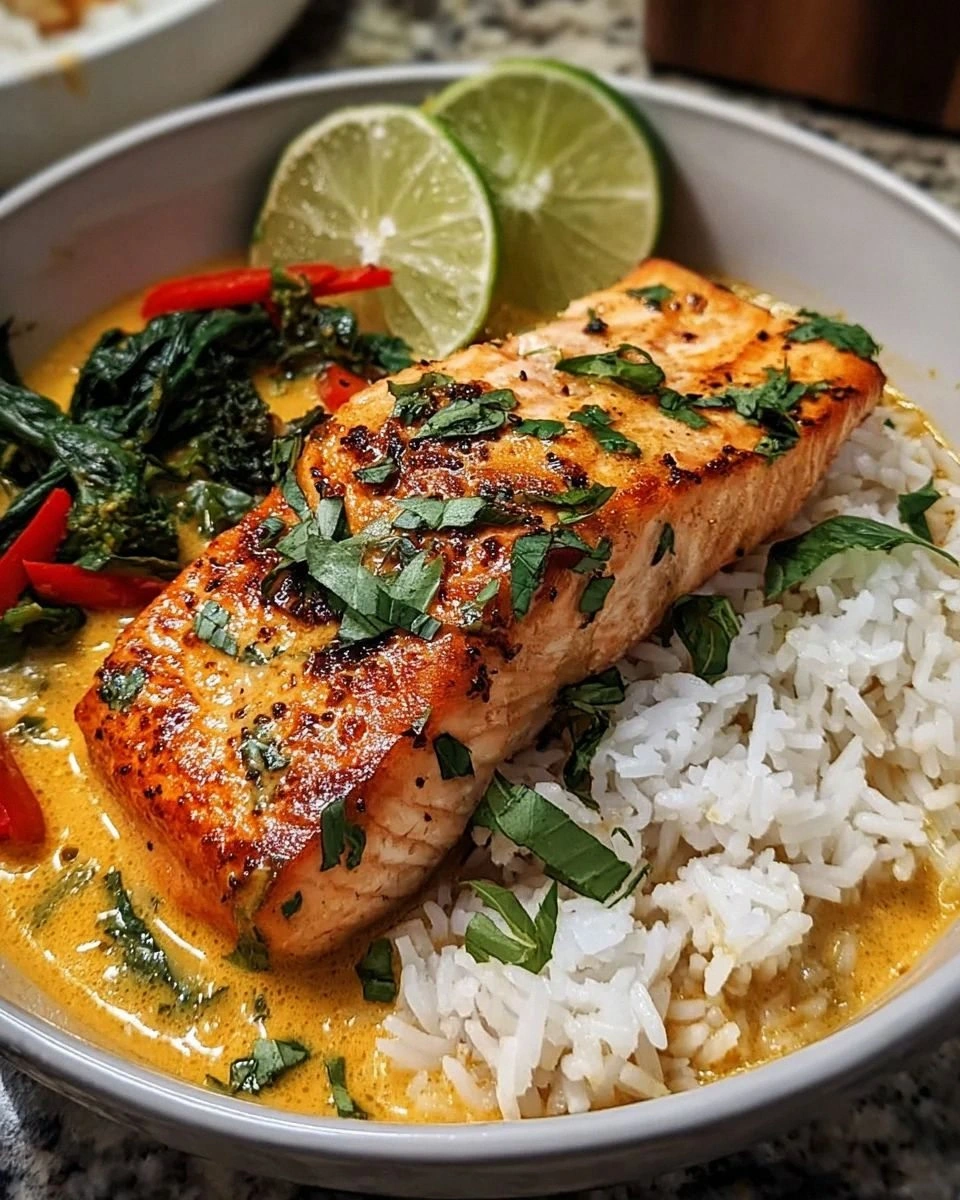
I still remember the first time I tried to make coconut curry salmon — I was standing in my tiny apartment kitchen, armed with nothing but a dented saucepan, a half-empty can of coconut milk, and a wild sense of optimism. The result? A gloopy, overcooked mess that tasted like someone had boiled a beach towel in curry powder. My roommate politely took one bite, then offered to "help me finish it" by ordering pizza. I was mortified, but also hooked. I knew somewhere beneath that culinary disaster was a dish worth fighting for. Fast forward through three dozen test batches, a few fire alarms, and one very memorable dinner party where guests literally licked their plates clean, and here we are. This is the version that made my spice-averse dad ask for seconds. The sauce is silky, fragrant, and just bold enough to make the salmon feel like it’s on a tropical vacation. The fish stays buttery inside, with edges that crisp like golden parchment. One whiff of the ginger and garlic hitting coconut oil, and you’ll understand why my neighbors started dropping by “just to say hi” whenever I tested this.
Most recipes get this completely wrong. They drown the salmon in sauce until it tastes like fishy soup, or they crank the heat and turn the coconut milk into a grainy, broken disaster. I’ve tested every hack, shortcut, and so-called “secret” on the internet so you don’t have to. The breakthrough came when I started treating the coconut milk like heavy cream: lower heat, longer reduction, and a single moment of bravery where I whisked in the curry paste off the heat. That tiny tweak turned the sauce from thin and sad to velvety and luxurious — the kind that clings to each flake of salmon like velvet on royalty. Picture yourself pulling this out of the oven, the whole kitchen smelling like a beachside market in Phuket, your phone buzzing with texts from friends who “just happened to be in the neighborhood.”
If you’ve ever struggled with dry salmon, muddy curry, or sauces that split into an oily mess, you’re not alone — and I’ve got the fix. I’ll be honest: I ate half the batch before anyone else got to try it, standing over the stove in my pajamas, swiping sauce straight from the spoon. That’s how good this is. Ready for the game-changer? We’re searing the salmon first, then letting it finish gently in the sauce so it stays outrageously moist. Stay with me here — this is worth it.
Let me walk you through every single step — by the end, you’ll wonder how you ever made it any other way.
What Makes This Version Stand Out
- Velvet-Soft Salmon: Instead of tough, chalky fillets, you get flesh that parts at the mere nudge of a fork. The trick is a quick sear followed by a gentle simmer — think of it as a spa day for your fish.
- Layered Curry Flavor: Most recipes dump everything in at once and hope for the best. We bloom the curry paste in coconut oil first, coaxing out caramelized depth before the coconut milk even joins the party.
- One-Pan Elegance: Everything happens in a single skillet, which means you can go from fridge to table in under 45 minutes and still have only one dish to wash. Netflix waits for no one.
- Customizable Heat: I dare you to taste this and not go back for seconds. Start mild, then spike your own bowl with extra chilies if you’re feeling feisty. Peace in the household = maintained.
- Make-Ahead Magic: The sauce actually improves overnight, so you can prep on Sunday and look like a culinary wizard on Wednesday. Just reheat gently and slide in the salmon at the last moment.
- Restaurant-Worthy Presentation: Those bright bell-pepper confetti bits and a final snow of cilantro make people think you attended culinary school in Bangkok. Instagram will never know you learned it from a chatty blog post.
Alright, let’s break down exactly what goes into this masterpiece...
Inside the Ingredient List
The Flavor Base
Salmon fillets are the star, so buy the best you can find. Look for vibrant, almost translucent flesh that springs back when pressed. If it smells like the ocean on a good day, you’re golden; if it smells like the ocean on a bad day, run. I prefer skin-on because that skin crisps into a savory cracker that even sworn fish-skin haters steal off the pan. Four six-ounce fillets feed four polite people or two ravenous ones — you decide.
Olive oil may seem basic, but its fruity pepperiness lays the first savory track for the curry train. A tablespoon is all you need; we’re not deep-frying, just creating a nonstick shield. Coconut oil joins later for the aromatics, bringing a whisper of tropical sweetness that plays beautifully with the curry paste. Skip the fancy extra-virgin for searing; save that for salad dressings where its flavor can shine.
The Texture Crew
Full-fat coconut milk is non-negotiable. Light versions are just water wearing a coconut costume, and your sauce will taste like disappointment. Shake the can — you should hear almost no slosh, a sign of thick, lush cream. If you open it and see pure white solidity on top, do a little victory dance; that’s the good stuff. Red bell pepper isn’t just color — its juicy crunch gives your teeth something to celebrate against the soft salmon and silky sauce.
Onion, garlic, and ginger are the holy trinity. Dice the onion finely so it melts away, but keep the garlic and ginger chunky for little bursts of zing. Fresh ginger smells like sunshine captured in root form; if yours has gone wrinkly, toss it and buy more. The snap when you break off a knob should be crisp, like a tree branch full of secrets.
The Unexpected Star
Red curry paste is the soul of the dish, but not all brands are created equal. Taste a pea-sized dab straight — it should be complex, not just hot. If your tongue goes numb from salt before spice, dilute with a squeeze of lime and a pinch of brown sugar. Soy sauce (or tamari for gluten-free friends) deepens everything with umami, like turning up the bass on your favorite song. And that tiny spoonful of brown sugar? It’s the difference between a flat painting and one that pops with highlights.
The Final Flourish
Lime juice added at the very end is like a flashbulb going off — everything suddenly looks and tastes brighter. Zest it first; the oils in the skin hold twice the perfume. Fresh herbs should be torn, not chopped, so they release volatile aromatics instead of getting bruised and bitter. And if you’re brave, a single sliced red chili on the side turns dinner into choose-your-own-adventure.
Everything’s prepped? Good. Let's get into the real action...
The Method — Step by Step
- Pat the salmon very dry with paper towels — moisture is the enemy of that golden crust. Season both sides with sea salt, black pepper, garlic powder, and a whisper of paprika. The spices should look like a light snowfall, not a blizzard. Heat olive oil in a wide skillet over medium-high until it shimmers like a mirage. Lay the fillets skin-side down and don’t touch them for three whole minutes; that sizzle when it hits the pan? Absolute perfection.
- When the skin releases easily and looks like bronzed glass, flip and cook another 90 seconds. Transfer to a plate; they’ll finish later in the sauce so stay cool if the centers look shy. Lower heat to medium, add coconut oil, and toss in the diced onion. Stir until the edges turn translucent and your kitchen smells like you’ve been adopted by a Thai grandmother. Drop in the garlic and ginger; cook just 45 seconds — you want fragrance, not brown bitterness.
- Spoon in the red curry paste and mash it around so every fleck kisses the hot fat. The color will deepen from scarlet to brick red; that’s the paprika and lemongrass toasting. Pour in a splash of coconut milk and whisk until it looks like sunset paint. Once smooth, pour the rest of the can and bring to a gentle simmer, not a rolling boil — think jacuzzi bubbles, not jacuzzi jets.
- Stir in soy sauce, brown sugar, and broth. Let it burble uncovered for five minutes so flavors marry and the sauce thickens just enough to coat a spoon. Slide the salmon back in, skin-side up if you want to keep it crispy, or down if you prefer it silky. Cover and simmer on your lowest burner for six minutes. Set a timer; this is not the moment to reorganize your spice rack.
- While the salmon lounges, scatter in thin strips of red bell pepper. They’ll stay snappy and infuse the sauce with a fresh sweetness. After six minutes, peek — the fish should flake at the thickest part but still look glossy inside. Squeeze in lime juice, shower with torn cilantro and basil, and serve immediately over steaming rice. The aroma rising off the pan will make you forget every take-out curry you’ve ever had.
- Spoon rice into shallow bowls, nestle the salmon on top, and ladle sauce until it pools like liquid treasure. Garnish with extra herbs and a fan of chili slices for the brave. Serve with chilled white wine or an ice-cold lime soda — the contrast makes the curry sing. Sit down immediately; this dish waits for no one.
- Leftovers (if you have any) cool completely before transferring to airtight containers. The rice and salmon keep best stored separately so textures stay intact. Tomorrow’s lunch will taste even better as the spices throw a reunion party overnight. Reheat gently with a splash of water or broth, covered, until just warmed through — 90 seconds in the microwave on medium power does the trick.
That's it — you did it. But hold on, I've got a few more tricks that'll take this to another level...
Insider Tricks for Flawless Results
The Temperature Rule Nobody Follows
Most home cooks crank the heat under coconut milk, thinking hotter equals faster. Wrong. High heat splits the fat, leaving you with an oily slick that no amount of whisking will emulsify. Keep it at a lazy simmer — tiny bubbles should kiss the surface like shy fish. If you see aggressive bubbles, slide the pan halfway off the burner for 30 seconds. Your sauce will stay glossy, not greasy.
Why Your Nose Knows Best
Curry paste goes through a magical transformation when the raw spices toast. Stand over the pan and inhale; when the harsh edge softens and you smell something round and nutty, you’re there. If it still smells like a spice jar, keep stirring. A friend tried skipping this step once — let’s just say it didn’t end well, and her cat left the kitchen.
The 5-Minute Rest That Changes Everything
After the salmon finishes, turn off the heat and let the skillet sit covered for five extra minutes. The proteins relax, the juices redistribute, and your fish goes from good to spoon-tender. Resist poking; good things come to those who wait. During this time, set the table, pour drinks, and pretend you’re the host of your own cooking show.
Creative Twists and Variations
This recipe is a playground. Here are some of my favorite ways to switch things up:
Green Curry Coconut Salmon
Swap red curry paste for green and add a handful of Thai basil plus a diced zucchini. The green version is grassier, fresher, and feels like eating a jungle. Finish with a squeeze of orange instead of lime for a sunny twist.
Tropical Mango Edition
Stir in half a cup of fresh mango purée during the final simmer. The fruit’s natural sugars amplify the coconut and tame any rogue heat. Top with thinly sliced red chile and mint for a beach-club vibe.
Creamy Cashew Upgrade
Blend two tablespoons of roasted cashews with a splash of coconut milk until silk-smooth, then whisk into the sauce. You’ll get extra body and a subtle nuttiness that makes people ask, “What’s your secret?”
Vegan-But-Equally-Luxurious
Replace salmon with thick slabs of cauliflower steak; sear until deeply caramelized and proceed as written. Chickpeas stirred in at the end add protein and turn it into a hearty vegetarian main that even carnivores devour.
Fire-Breather’s Delight
Use two heaping tablespoons of curry paste plus a sliced bird’s-eye chili. Stir in a teaspoon of chili crisp at the end for crunchy heat. Keep a mango lassi on standby — you’ll need the fire extinguisher.
Storing and Bringing It Back to Life
Fridge Storage
Cool completely, then refrigerate sauce and salmon separately in airtight glass containers up to three days. Glass prevents the curry perfume from infiltrating your leftover birthday cake. Always store rice on its own; nobody likes soggy grains.
Freezer Friendly
The sauce freezes beautifully for two months. Pour into freezer bags, press out air, and lay flat for space-saving bricks. Salmon itself can be frozen cooked, but expect a slightly firmer texture upon reheating — still delicious, just different. Thaw overnight in the fridge, never on the counter.
Best Reheating Method
Add a splash of water or broth to the sauce and warm gently in a covered skillet over low heat until just bubbling. Nestle cold salmon in the sauce for the last two minutes so it heats through without turning rubbery. Microwave works in 30-second bursts at 70% power, but stovetop keeps textures happier.