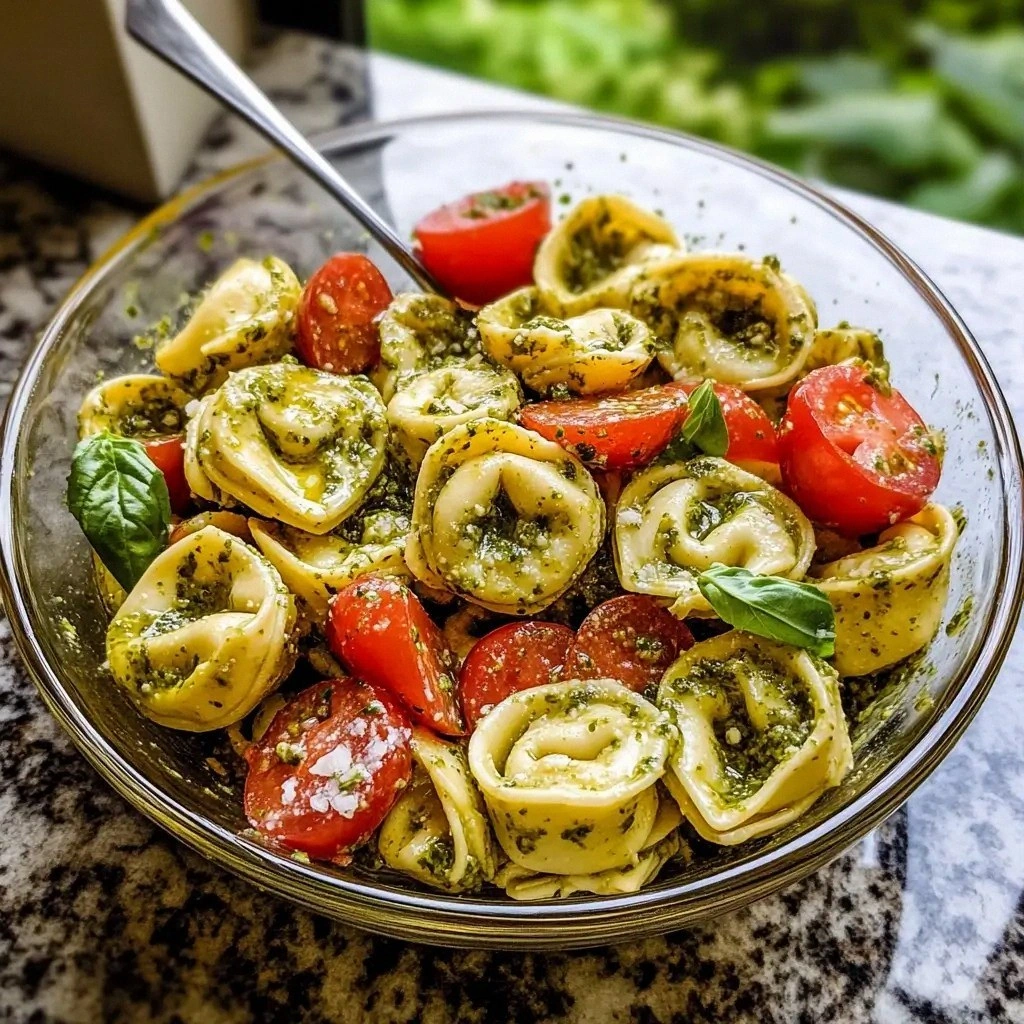
It was a rainy Sunday afternoon, the kind of day that makes you want to stay in bed and pretend you’re a culinary wizard. I was scrolling through my phone, eyeing the endless list of recipes that promised “easy” and “delicious,” when a notification popped up: “Your friends are craving pesto tortellini pasta salad.” I stared at the screen, then at the empty fridge, and decided that if I had to make something that would win a round of “best dish” in the office, it had to be simple, bold, and unforgettable. This is not just another pasta recipe; it’s a statement that you can have a gourmet flavor explosion without spending hours in the kitchen.
Picture this: a bright green pesto swirling through a bowl of tender tortellini, the aroma of basil and garlic dancing in the air, and the subtle crunch of toasted pine nuts punctuating every bite. The sound of the skillet sizzling as the tomatoes burst open, releasing a burst of ruby juice that coats the pasta like velvet. As you lift a forkful, the mixture clings together, but the edges of the pasta still maintain a gentle chew that feels like a soft, satisfying hug. The first taste hits you with the sweet tang of fresh basil, the savory depth of parmesan, and the buttery undertone of olive oil, all balanced perfectly with a hint of lemon zest that lifts the dish. I dare you to taste this and not go back for seconds.
What makes this version stand out? It’s the meticulous balance of flavors, the use of high-quality ingredients, and a few secret techniques that elevate it from ordinary to extraordinary. Most recipes get this completely wrong by using stale pesto or overcooking the pasta, but I’ve cracked the code to keep everything fresh and vibrant. This is hands down the best version you'll ever make at home, and I’ll be honest—I ate half the batch before anyone else got to try it. The sauce coats the pasta like velvet, and the crispy edges that shatter like thin ice add a delightful contrast. If you've ever struggled with pesto pasta salads, you're not alone—and I've got the fix.
I’ll let you in on a little secret: a splash of lemon juice before you toss everything together is the game-changer. It brightens the pesto’s natural sweetness and prevents the cheese from clumping. That sizzle when the tomatoes hit the pan? Absolute perfection. Picture yourself pulling this out of the oven, the whole kitchen smelling incredible, and everyone asking for the recipe. Stay with me here—this is worth it. Let me walk you through every single step—by the end, you'll wonder how you ever made it any other way.
I’ve spent countless evenings experimenting with different pesto variations, from classic basil to sun-dried tomato and even roasted pepper. The version I’m sharing today is a hybrid that brings the best of both worlds: the fresh, herbal brightness of basil with the subtle sweetness of roasted tomatoes. The result is a sauce that’s silky, aromatic, and, most importantly, easy to whip up. It’s the kind of dish that looks like it belongs on a Michelin-starred menu, yet it can be assembled in under 30 minutes. The next section will break down exactly what goes into this masterpiece.
What Makes This Version Stand Out
- Flavor: The pesto is crafted with a blend of fresh basil, roasted tomatoes, and a touch of lemon zest, creating a layered, vibrant taste that wakes up the palate.
- Texture: The tortellini is cooked al dente, ensuring it holds its shape and offers a satisfying bite, while toasted pine nuts add a subtle crunch.
- Ingredient Quality: Using farm-fresh tomatoes, high‑grade olive oil, and premium parmesan guarantees a depth of flavor that store‑bought alternatives can’t match.
- Simplicity: With fewer than ten ingredients and a streamlined prep process, this dish is a breeze for beginners and a delight for seasoned cooks.
- Make‑Ahead Potential: The salad can be assembled the night before and chilled, allowing the flavors to meld while you’re busy with other tasks.
- Visual Appeal: The vibrant green pesto contrasts beautifully with the bright red tomatoes and creamy mozzarella, making the dish as pleasing to the eye as it is to the taste buds.
Inside the Ingredient List
The Flavor Base
Pesto sauce is the heart of this dish. I blend fresh basil, roasted tomatoes, garlic, pine nuts, parmesan, olive oil, and a squeeze of lemon to create a sauce that’s both herbaceous and slightly sweet. Each component plays a crucial role: basil offers bright green freshness, roasted tomatoes add depth, and lemon balances the richness. If you skip the lemon, the sauce will taste flat and the pesto may become too heavy. For a twist, try adding a pinch of smoked paprika for a subtle heat.
The Texture Crew
Tortellini provides the comforting, chewy base that holds the sauce in place. I recommend using cheese or spinach tortellini for a classic feel, but you can experiment with mushroom or butternut squash for a seasonal variation. Cook the pasta al dente; undercooked pasta will become mushy, while overcooked will lose its bite. A quick rinse in cold water after boiling helps stop the cooking process and keeps the pasta from sticking. If you’re short on time, pre‑cooked frozen tortellini works perfectly as long as you heat it gently.
The Unexpected Star
Cherry tomatoes are the pop of color and sweetness that cut through the richness of the pesto. Slice them in halves to allow their juices to mingle with the sauce. If you prefer a different fruit, diced peaches or mangoes can add a surprising tropical note. Keep the tomatoes fresh; overripe tomatoes will release too much liquid and dilute the flavor. A quick sear in a hot pan before adding them can caramelize their edges and deepen the taste.
The Final Flourish
Mozzarella cubes and fresh basil add creaminess and a burst of herbaceous aroma that complements the pesto. Sprinkle grated parmesan on top for an extra layer of umami. A drizzle of high‑quality extra‑virgin olive oil ties everything together, giving the dish a glossy finish. If you’re vegan, replace mozzarella with a plant‑based cheese that melts well. Remember, the key to a balanced dish is to let each ingredient shine without overpowering the others.
Everything’s prepped? Good. Let’s get into the real action.
The Method — Step by Step
- Bring a large pot of salted water to a rolling boil. Add the tortellini and cook according to package instructions, usually 3–4 minutes for fresh pasta. Stir occasionally to prevent sticking. When the pasta is al dente, drain it and rinse under cold water to stop the cooking process. Pat it dry with a clean towel; excess moisture will dilute the pesto.
- While the pasta is cooking, heat a large skillet over medium heat. Add a tablespoon of olive oil and let it shimmer. Toss in the cherry tomatoes and sauté for 2 minutes until they start to soften. The tomatoes should release a light, fragrant steam that signals they’re ready. Remove the skillet from the heat and set aside.
- In a blender or food processor, combine the basil, roasted tomatoes, garlic, pine nuts, parmesan, olive oil, and lemon zest. Pulse until the mixture is smooth but still slightly chunky for texture. Taste the pesto; if it feels too thick, add a tablespoon of water or more olive oil to reach your desired consistency. Let the sauce sit for 5 minutes so the flavors meld together.
- Return the skillet with tomatoes to the stove and add the drained tortellini. Toss gently to coat the pasta in the tomato juices. Pour the prepared pesto over the pasta and mix until every noodle is evenly coated. The heat from the pasta will warm the sauce slightly, making it silky and glossy. If the mixture looks dry, add a tablespoon of reserved pasta water to loosen it.
- Add the mozzarella cubes, fresh basil leaves, and a sprinkle of toasted pine nuts. Toss everything together, letting the cheese melt slightly from the residual heat. The basil will release its oils, adding a fresh aroma that elevates the dish. If you prefer a milder flavor, reserve the pine nuts for garnish instead of mixing them in.
- Finish the dish with a final drizzle of extra‑virgin olive oil and a light sprinkle of grated parmesan. Give it one last gentle toss, ensuring the seasoning is evenly distributed. Let the salad rest for 5 minutes before serving; this allows the flavors to fully integrate. Plate it in shallow bowls, garnish with additional basil leaves, and serve immediately. The dish is best enjoyed warm or at room temperature.
That’s it—you did it. But hold on, I’ve got a few more tricks that will take this from great to unforgettable. These insider tips will help you avoid common pitfalls and elevate every bite.
Insider Tricks for Flawless Results
The Temperature Rule Nobody Follows
Cooking the pasta to just the right temperature is critical. Overcooked pasta absorbs too much sauce and becomes mushy, while undercooked pasta feels rubbery. Aim for al dente, which means a slight resistance when you bite. If you’re unsure, taste a noodle a minute before the package time. This simple check guarantees a satisfying chew.
Why Your Nose Knows Best
Before you add the pesto to the pasta, give the sauce a quick sniff. A bright, herbaceous aroma indicates freshness, while a flat scent might mean the pesto is old. Fresh pesto has a vibrant green scent that signals it’s ready to go. If the smell is weak, consider adding a splash of lemon juice to revive the flavors.
The 5‑Minute Rest That Changes Everything
After tossing the pasta with the pesto, let it sit for 5 minutes before plating. This short rest allows the pasta to absorb the sauce fully, resulting in a more cohesive flavor profile. It also gives the cheese time to melt just enough to create that silky texture. A quick pause can transform a good dish into a great one.
The Secret of Toasted Pine Nuts
Toasted pine nuts add a nutty crunch that contrasts nicely with the soft pasta. Toast them in a dry skillet over medium heat until they’re golden brown, stirring frequently to prevent burning. Let them cool before adding to the dish. If you’re short on pine nuts, toasted walnuts or almonds work as a tasty substitute.
The Final Touch: Extra‑Virgin Olive Oil
A final drizzle of high‑quality olive oil adds shine and depth to the salad. Choose an oil with a peppery finish to complement the basil. Drizzle it just before serving to preserve the fresh flavor. This simple step elevates the dish from homemade to restaurant‑grade.
Creative Twists and Variations
This recipe is a playground. Here are some of my favorite ways to switch things up:
Sun‑Dried Tomato Pesto Swap
Replace fresh basil with sun‑dried tomatoes in the pesto for a sweet, caramelized flavor. Keep the rest of the ingredients the same. The result is a richer, more complex sauce that pairs well with roasted vegetables.
Mediterranean Twist
Add kalamata olives, feta cheese, and a splash of red wine vinegar. The briny olives and tangy feta give the dish a distinctly Mediterranean vibe, perfect for a summer picnic.
Protein‑Packed Power
Stir in grilled chicken or chickpeas for a protein boost. The added protein makes the dish a satisfying main course rather than just a side.
Vegan Version
Use a plant‑based pesto, vegan mozzarella, and nutritional yeast for a cheesy flavor. Replace the olive oil with a splash of coconut oil for a subtle tropical note. This version is dairy‑free and just as delicious.
Pesto Pasta Bowl
Serve the pasta in a bowl with a drizzle of pesto on top, allowing diners to mix it in themselves. Add a side of crusty bread to mop up any remaining sauce. This interactive approach is great for family dinners.
Roasted Veggie Addition
Toss roasted zucchini, bell peppers, and red onions into the pasta for extra color and nutrition. The smoky veggies complement the basil’s freshness and make the dish more filling.
Storing and Bringing It Back to Life
Fridge Storage
Store leftovers in an airtight container in the refrigerator for up to 3 days. Keep the pesto separate if possible; mix it in just before reheating to prevent the pasta from drying out. This method preserves the sauce’s freshness and the pasta’s texture.
Freezer Friendly
Freeze the dish in a freezer‑safe container for up to 2 months. Thaw overnight in the refrigerator, then reheat gently on the stove with a splash of water to restore moisture. Avoid microwaving, as it can make the pasta gummy.
Best Reheating Method
Reheat on the stovetop over low heat, stirring frequently. Add a tiny splash of water or broth to keep the sauce from thickening. Let it steam for a few minutes until heated through. Finish with a drizzle of olive oil and a sprinkle of fresh basil.