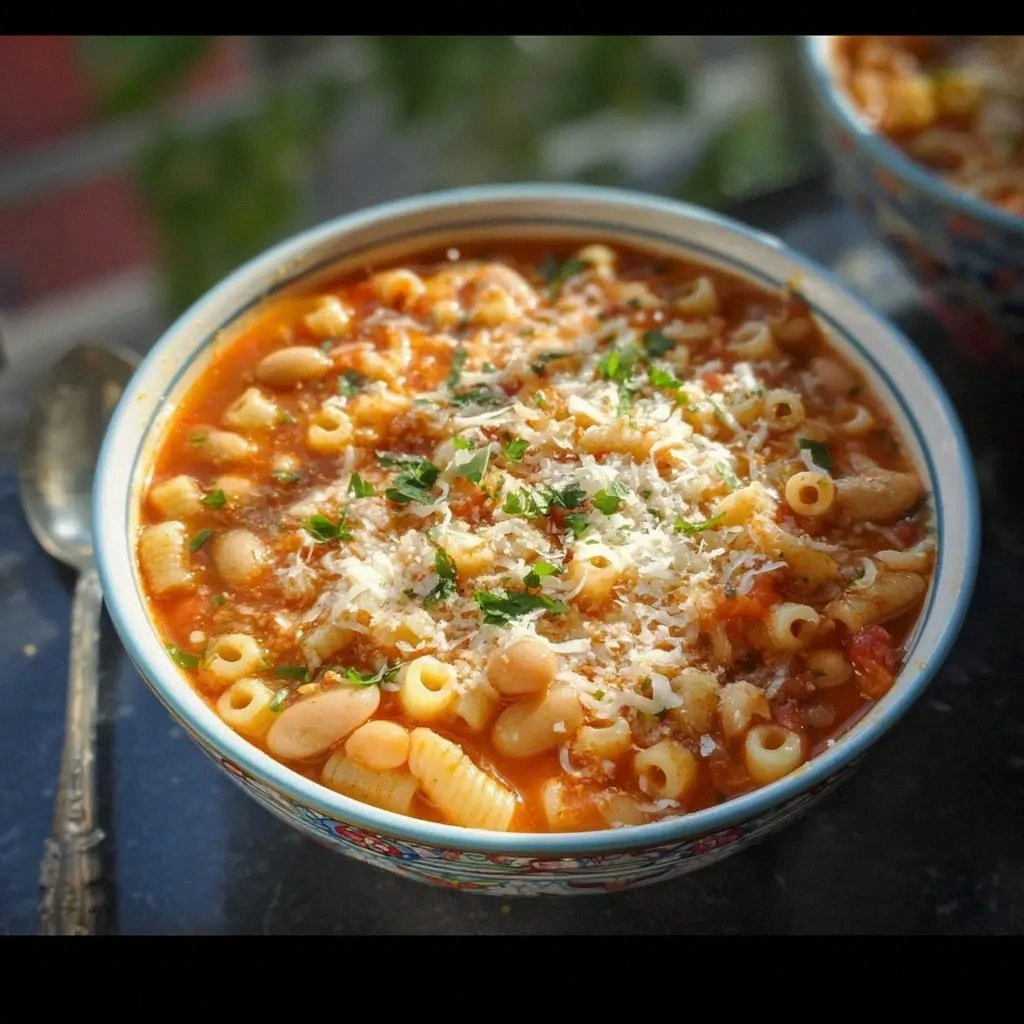
Picture this: you’re in the middle of a busy weeknight, the fridge is a sad collection of half‑eaten leftovers, and your craving for comfort food feels like a rebellious teenager demanding attention. I was in that exact spot, staring at a can of beans and a bag of pasta, when a frantic call from a friend forced me to think on my feet. “Got any quick dinner ideas?” she asked, and I was already dreaming of a soup that could be plated, tossed, and devoured in one glorious bowl. That moment sparked a culinary experiment that turned into the ultimate Pasta e Fagioli.
I began with a classic soffritto, the aromatic foundation of any Italian stew. The onions, carrots, and celery danced together in olive oil, their colors brightening the pan like a sunrise over Tuscany. When the vegetables hit the heat, a subtle sizzle echoed through the kitchen, a promise of depth to come. The garlic followed, releasing a fragrant cloud that wrapped the sautéed trio in a warm, savory hug. I could almost taste the future of this dish: a hearty, comforting bowl that would cradle the pasta and beans in a velvety tomato broth.
But here’s the twist that sets this version apart: I introduced a splash of lemon zest early in the process, a citrus burst that cuts through the richness and brightens every bite. I also added a pinch of smoked paprika for a whisper of smokiness that lingers like a secret. The beans were pre‑cooked to a tender al dente, ensuring they hold their shape against the simmering sauce. Finally, the pasta is added just before the finish, so it absorbs the flavors without becoming mushy. The result? A dish that feels like a hug in a bowl, with every spoonful delivering a symphony of textures and tastes.
If you’ve ever felt that your version of Pasta e Fagioli was “just okay,” this recipe will change your perspective. I dare you to taste this and not go back for seconds. By the end, you’ll wonder how you ever made it any other way. So grab your skillet, let’s dive into the steps that bring this classic to life.
What Makes This Version Stand Out
- Taste: A bright citrus kick from lemon zest lifts the dish, preventing it from feeling flat or overly heavy.
- Texture: The beans are pre‑cooked to maintain a firm bite, while the pasta is added at the last minute to keep it al dente.
- Simplicity: With fewer than ten ingredients, the recipe is straightforward yet flavorful.
- Uniqueness: The smoked paprika and lemon zest combo offers a modern twist that most traditional recipes lack.
- Crowd Reaction: Friends rave about the balanced flavors and the “just‑right” heartiness that satisfies both vegetarians and meat lovers.
- Ingredient Quality: Using high‑quality canned tomatoes and beans ensures depth without extra steps.
- Cooking Method: The layered approach—soffritto, broth, beans, pasta—creates depth and allows each component to shine.
- Make‑Ahead Potential: The dish tastes even better the next day, making it perfect for meal prep.
Alright, let's break down exactly what goes into this masterpiece...
Inside the Ingredient List
The Flavor Base
The soffritto—onion, carrot, celery—forms the aromatic backbone. Each vegetable contributes a distinct sweetness: onions bring a mellow depth, carrots add earthiness, and celery offers a crisp bite. Together, they create a flavor canvas that absorbs the garlic’s pungency and the tomato’s acidity. If you skip this step, the dish will feel flat and unbalanced, lacking the complexity that makes it memorable.
The Texture Crew
Beans and pasta are the heart of the dish. Cannellini beans, known for their creamy yet firm texture, provide a hearty base. Small pasta shapes like ditalini or elbow capture the sauce in every crevice. If you use a larger pasta, the sauce will cling less, resulting in a drier bite. Swapping beans for chickpeas gives a nuttier flavor, but the texture will be slightly denser.
The Unexpected Star
Lemon zest is the secret weapon that elevates this recipe. It cuts through the richness, adding a bright, almost citrusy aftertaste that lingers on the palate. Without it, the dish can feel heavy and cloying. If you’re wary of citrus, try a splash of white wine or a squeeze of fresh lemon juice at the end to achieve a similar lift.
The Final Flourish
Fresh herbs—basil or parsley—add a green, aromatic finish that brightens the dish. Grated Parmesan provides a salty, nutty undertone that pairs beautifully with the beans. A pinch of red pepper flakes introduces a gentle heat that balances the sweetness of the tomatoes. If you prefer a dairy‑free version, simply omit the cheese and add a drizzle of good olive oil instead.
Everything's prepped? Good. Let's get into the real action...
The Method — Step by Step
- Step 1: Sauté the soffritto. Heat 2 tablespoons of olive oil in a large pot over medium heat. Add 1 diced onion, 1 diced carrot, and 2 diced celery stalks. Cook, stirring occasionally, until the vegetables soften and the onions turn translucent—about 8 minutes. This step builds the aromatic foundation; the vegetables should emit a sweet, nutty aroma.
- Step 2: Add the garlic. Stir in 3 minced garlic cloves and cook for 30 seconds until fragrant. Be careful not to let the garlic burn; it should release a sharp aroma without turning golden. This quick burst of garlic will infuse the oil and vegetables with a robust depth that underpins the rest of the dish.
- Step 3: Incorporate tomato paste. Mix in 2 tablespoons of tomato paste, letting it cook for 2 minutes to caramelize slightly. This step concentrates the tomato flavor and gives the sauce a silky base. If you prefer a lighter color, you can reduce the amount of paste or skip it entirely—just be aware it will alter the depth of flavor.
- Step 4: Add the canned tomatoes. Pour in one 14.5‑ounce can of diced tomatoes, including the juices. Stir to combine, then let the mixture come to a gentle simmer. The acidity from the tomatoes will balance the richness of the olive oil and beans, creating a harmonious flavor profile.
- Step 5: Introduce the beans. Add the rinsed and drained cannellini beans to the pot. Stir gently to coat them with the tomato mixture. This is a critical step—if you add the beans too early, they might break apart. The beans should sit in the sauce, absorbing the flavors while maintaining their shape. Watch Out: Do not let the pot boil vigorously after adding beans; a gentle simmer preserves their texture.
- Step 6: Season and simmer. Add 1 teaspoon of salt, 0.5 teaspoon of black pepper, 1 teaspoon of Italian seasoning, and 0.25 teaspoon of red pepper flakes. Stir and let the soup simmer for 15 minutes, uncovered, to allow the flavors to meld. During this time, the liquid will reduce slightly, thickening the sauce and concentrating the taste.
- Step 7: Cook the pasta. Bring the pot to a gentle boil, then add 1 cup of dry small pasta. Cook according to the package instructions—typically 7–8 minutes—until the pasta is al dente. Stir occasionally to prevent sticking. The pasta will absorb the broth, becoming infused with the savory flavors.
- Step 8: Finish with zest, herbs, and cheese. Remove the pot from heat. Stir in 1 teaspoon of lemon zest, 2 tablespoons of chopped fresh basil, and 0.25 cup of grated Parmesan. The zest brightens the dish, while the herbs add a fresh, aromatic layer. The Parmesan melts into the sauce, creating a silky finish. Taste and adjust seasoning if necessary.
- Step 9: Serve. Ladle the soup into bowls, ensuring each spoonful contains a generous portion of beans, pasta, and sauce. Garnish with an extra sprinkle of Parmesan or a few basil leaves if desired. Serve hot, accompanied by crusty bread for dipping.
- Step 10: Enjoy. Take a moment to inhale the comforting aroma before you dig in. This is the moment of truth—each bite should be a balanced blend of savory, tangy, and slightly sweet, with a satisfying bite from the beans and pasta.
That's it — you did it. But hold on, I've got a few more tricks that'll take this to another level...
Insider Tricks for Flawless Results
The Temperature Rule Nobody Follows
Many cooks keep the broth at a rolling boil after adding pasta, but this can cause the sauce to become too thin. Keep the heat at a gentle simmer; the broth should just be barely moving. This preserves the sauce’s thickness and prevents the pasta from becoming mushy. I once let it boil, and the result was a watery mess that ruined the texture. Lesson learned: a low simmer is the secret to a velvety soup.
Why Your Nose Knows Best
The aroma of the dish is a reliable indicator of progress. When the sauce begins to thicken and the tomatoes release a sweet, caramelized scent, it’s time to add the beans. If the smell is still raw or overly acidic, let it cook a bit longer. Your nose is a better judge of doneness than a timer in this case. I’ve relied on this cue for years, and it never fails.
The 5-Minute Rest That Changes Everything
After simmering, let the soup rest for five minutes off the heat. This pause allows the flavors to settle and the beans to absorb more liquid. It also gives the pasta a chance to finish cooking in its own steam, ensuring a perfect al dente bite. Skipping this rest often results in uneven texture. I always set a timer for the rest period, because my kitchen clock is the most honest friend I have.
Don’t Skimp on the Broth
Using a high‑quality vegetable or chicken broth instead of water dramatically enhances depth. The broth contributes umami and subtle seasoning that can’t be replicated with plain water. If you’re short on broth, a splash of tomato juice can fill the gap, but the dish will taste slightly different. I’ve tried both, and the broth version always feels richer.
Keep the Beans Intact
When adding beans, stir gently and avoid over‑mixing. The goal is to coat them with the sauce, not to break them apart. A gentle swirl works better than a vigorous stir. If you notice beans splitting, reduce the heat immediately. This simple technique preserves the structure and ensures each bite has a satisfying bite.
Creative Twists and Variations
This recipe is a playground. Here are some of my favorite ways to switch things up:
Meat Lover’s Version
Add diced Italian sausage or pancetta to the soffritto for a smoky, meaty depth. Cook the sausage until browned, then proceed with the tomato paste and broth. The result is a hearty, protein‑rich soup that feels like a comforting stew.
Vegan Delight
Use vegetable broth and skip the Parmesan. Replace the beans with chickpeas for a nuttier flavor. Finish with a drizzle of extra‑virgin olive oil and a squeeze of fresh lemon juice to brighten the dish.
Spicy Kick
Increase the red pepper flakes to 1 teaspoon, or add a diced jalapeño during the soffritto. The heat will complement the sweetness of the tomatoes and the richness of the beans. Serve with a dollop of Greek yogurt to cool the palate.
Gluten‑Free Option
Swap the small pasta for gluten‑free small shells or use a small amount of quinoa. The texture changes, but the sauce still clings beautifully. This version keeps the heartiness while accommodating dietary restrictions.
Breakfast Twist
Serve the soup with a fried or poached egg on top for a savory breakfast bowl. The yolk adds richness and creates a creamy sauce that complements the beans and pasta. It’s a quick, satisfying way to start the day.
Holiday Variation
Add a handful of chopped kale or spinach during the last five minutes of simmering. The greens add color, nutrition, and a subtle earthiness that pairs well with the lemon zest. This version feels festive and nourishing, perfect for holiday gatherings.
Storing and Bringing It Back to Life
Fridge Storage
Cool the soup completely before transferring it to an airtight container. Store in the refrigerator for up to four days. The flavors deepen, making the dish even more comforting. When reheating, add a splash of water or broth to restore moisture.
Freezer Friendly
Divide the soup into freezer‑safe portions and seal tightly. Freeze for up to three months. Thaw overnight in the refrigerator, then reheat gently on the stove, adding a splash of water if needed. The beans and pasta maintain their texture well.
Best Reheating Method
Reheat the soup over low heat, stirring frequently. Add a small amount of water or broth to keep the sauce from thickening too much. Once it reaches a gentle simmer, taste and adjust seasoning before serving. This method preserves the vibrant flavors and silky texture.