I still remember the night I ruined dinner so spectacularly that the smoke alarm gave me a standing ovation. There I stood, waving a dish towel like a white flag, while a tray of dried-out sausage and shriveled potatoes glared back at me from the oven. My friends were due to arrive in forty-five minutes, the kitchen smelled like a campfire, and I was one rubbery potato away from serving take-out menus as an appetizer. Fast-forward through a frantic pantry raid, a little culinary improvisation, and one very happy accident involving ranch seasoning and a mountain of cheddar, and I pulled off what my buddies now call “the dish that saved game night.” That gloriously cheesy, smoky, ranch-kissed skillet of comfort is the very one you’re about to master, and I promise it will hijack your weeknight rotation faster than you can say “seconds, please.”
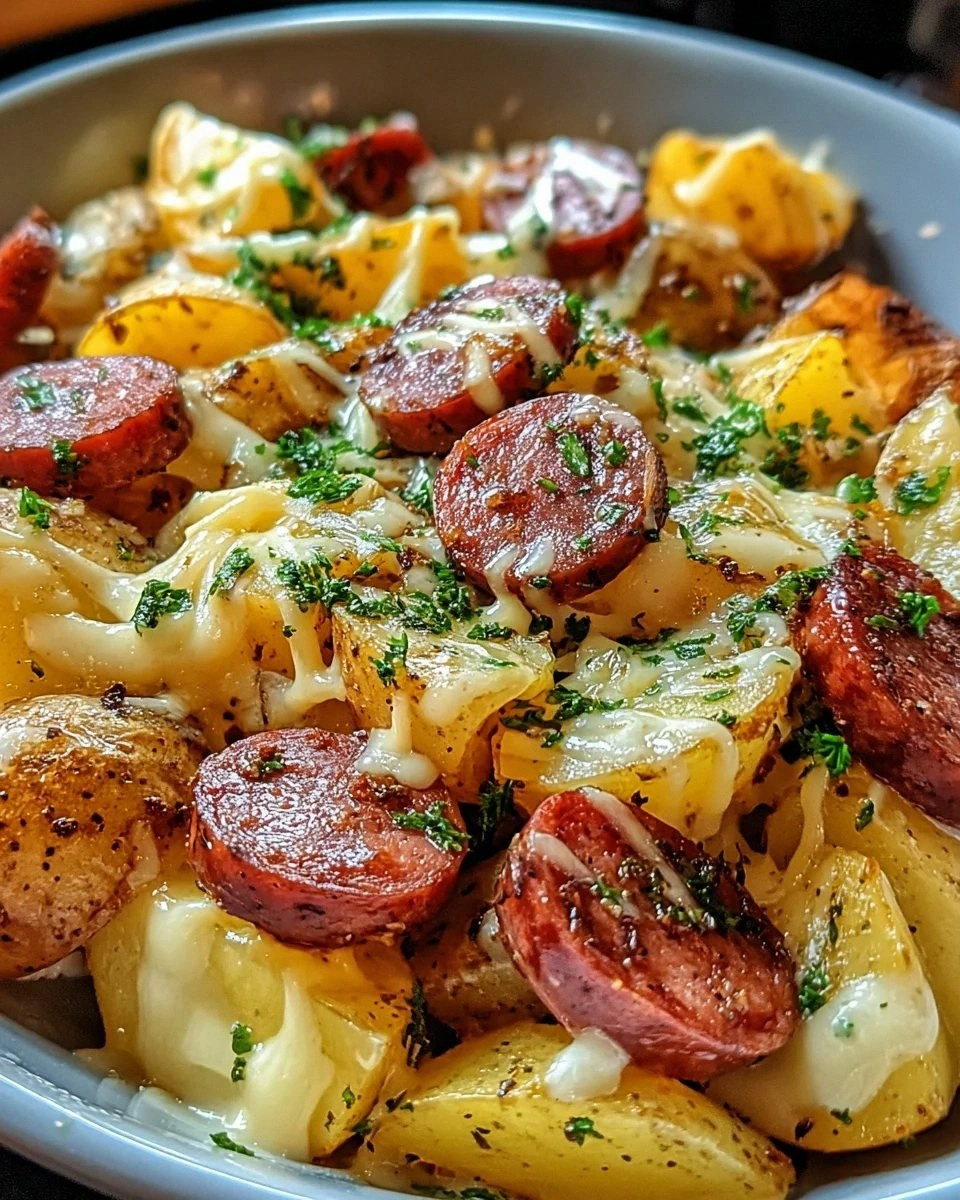
Picture this: tender baby potatoes roasted until their edges caramelize into crispy, golden nuggets; coins of smoky sausage bronzed in their own rendered goodness; and a molten blanket of sharp cheddar that stretches into Instagram-worthy cheese pulls the second you plunge in a fork. That first bite hits you like a warm hug from the inside out—savory, herby, a little peppery, and unapologetically rich. The ranch seasoning doesn’t just whisper; it sings backup harmonies with the garlic and onion powders while the olive oil coaxes every last bit of flavor from the potato skins. Close your eyes and you’ll swear there’s a backyard barbecue happening right on your tongue, minus the mosquitoes and the neighbor who always monopolizes the karaoke mic.
Most recipes for cheesy potato bakes treat sausage like an afterthought—limp slices buried under a bland, flour-thickened sauce that tastes more like kindergarten paste than dinner. This version flips the script. We sear the sausage first so the edges blister and render, creating smoky fond that seasons the whole skillet. Then we crank the oven high enough to transform humble baby potatoes into creamy-centered, crackly-edged gems. Finally, we add cheese in two strategic waves so you get both melty pockets and those irresistible crispy cheese-lattice corners. If you’ve ever struggled with watery bakes, rubbery sausage, or potatoes that refuse to cook through, you’re not alone—and I’ve got the fix.
Stay with me here, because the next part is pure magic. We’re going to finish the whole thing under the broiler for exactly 97 seconds (yes, I timed it) so the top layer of cheddar bubbles into a bronzed crown while the ranch-spiked sour cream drizzle cools everything down to the perfect eating temperature. By the time you scatter a confetti of fresh parsley on top, the intoxicating smell will have recruited every human (and possibly the dog) to hover around your stove. Let me walk you through every single step—by the end, you’ll wonder how you ever made it any other way.
What Makes This Version Stand Out
- Smoke First, Cheese Second: Searing the sausage before it ever meets the potatoes renders the fat and builds a smoky base that permeates the entire dish. Most recipes toss everything together raw and hope for the best—we don’t hope, we engineer flavor.
- Two-Temperature Potato Roast: We start at a blistering 450 °F for maximum caramelization, then drop to 375 °F so the insides turn cloud-fluffy while the outsides stay crispy. Other recipes keep a flat, sad 350 °F and wonder why their potatoes taste steamed.
- Cheese Insurance Policy: A stealth layer of cheese halfway through roasting melts into every crevice, acting like savory glue so the final cheesy topper doesn’t slide off when you scoop. Say goodbye to naked potatoes abandoned under a cheese blanket.
- Ranch Seasoning From Scratch Option: I’ll show you a lightning-fast DIY mix that beats the pants off any packet—no weird anti-caking chemicals, just honest herbs you already own. Once you taste the difference, you’ll feel personally betrayed by the store-bought stuff.
- One-Pan Bragging Rights: Skillet, wooden spoon, and a single cutting board—cleanup is so minimal you can finish scrubbing before the cheese cools. Other casseroles demand three bowls and a sacrifice to the dishwasher gods.
- Make-Ahead MVP: You can par-roast the potatoes and sausage earlier in the day, then just reheat, add cheese, and broil when guests arrive. Perfect for potlucks or those nights when Netflix is calling your name louder than the stove.
Alright, let’s break down exactly what goes into this masterpiece...
Inside the Ingredient List
The Flavor Base
Smoked sausage is the charismatic lead here—go for a good-quality halal beef or turkey sausage with a firm snap. Cheap sausages dump watery filler that turns your bake into soup; a hearty sausage stays plump and seasons the potatoes as it roasts. Slice it into thick coins so the edges curl into caramelized cups that trap little pools of cheddar. If you only have rope sausage, cut it into half-moons so every piece gets maximum browning real estate.
Olive oil is the silent partner that conducts heat, encourages browning, and helps ranch spices stick instead of burn. Don’t skimp—those potatoes are thirsty. If you’re out of olive oil, avocado oil or even melted ghee works, but avoid butter at high temps because milk solids will scorch before your potatoes soften. You’ll know you added enough when every piece glimmers like it’s wearing a tiny top hat.
The Texture Crew
Baby potatoes are cute, yes, but their real superpower is a thin edible skin that crisps like a dream while the inside stays creamy. Halve the larger ones so every chunk is bite-sized; uniform pieces cook evenly and you won’t get that awkward half-raw potato lurking under the cheese. Russets can tag along in a pinch—just cube them small and soak in cold water for ten minutes to leach excess starch so they don’t glue together.
Shredded cheddar brings gooeyness and that nutty, tangy backbone. Buy a block and shred it yourself; pre-shredded cellulose-coated cheese resists melting into glossy puddles. For maximum drama, mix sharp white and orange cheddar so you get contrasting color pops. If you like heat, swap in half pepper jack and watch grown adults weep happy tears.
The Unexpected Star
Ranch seasoning mix is the fairy dust that ties everything together. Sure, you could tear open a packet, but whisking together dried dill, parsley, chives, garlic powder, onion powder, and a whisper of buttermilk powder takes ninety seconds and tastes like ranch went on a spa retreat. The DIY version clings to potatoes instead of turning dusty like the store stuff. Plus you control salt—crucial because sausage and cheese already bring plenty to the party.
The Final Flourish
Sour cream thinned with a squeeze of lemon becomes a cool, tangy ribbon that balances the smoky richness. Drizzle it in thin stripes right before serving so the cold hits the hot cheese and creates a temperature tango. Greek yogurt can stand in if you’re feeling virtuous, but full-fat sour cream melts silkier. Whisk it to loosen; plopping cold globs straight from the fridge will seize on contact.
Fresh parsley is more than vanity. Its grassy bite slices through the heaviness and adds a pop of color that screams “I have my life together,” even if you just scraped that skillet out of the sink. If parsley feels too safe, try chopped scallions or even cilantro for a south-of-the-border twist.
Everything’s prepped? Good. Let’s get into the real action...
The Method — Step by Step
- Preheat your oven to 450 °F (230 °C) and place a 12-inch cast-iron skillet on the middle rack while it heats. A screaming-hot pan jump-starts browning so potatoes don’t stick and sausage sizzles the second it lands. While the oven works, halve your baby potatoes and slice the sausage into half-inch coins. Dry the potatoes with a kitchen towel—excess moisture is the enemy of caramelization. Toss them in a big bowl with olive oil, ranch seasoning, garlic powder, onion powder, and a few cracks of black pepper until every surface is slick and speckled with herbs.
- Carefully remove the scorching skillet (oven mitts, please—unless you enjoy branding your palms). Scatter the sausage slices in first; they should sizzle like applause. Let them sit undisturbed for ninety seconds so the bottoms develop a mahogany crust. Flip each coin with tongs; you’re looking for edges that curl like tiny bowls ready to cradle molten cheese later. Transfer the sausage to a plate—don’t worry, it’ll finish cooking with the potatoes.
- Pile the seasoned potatoes into the same skillet, cut-side down for maximum contact. Resist stirring for the first ten minutes; those crisp bottoms are flavor gold. Slide the skillet back into the oven and roast at 450 °F for fifteen minutes. When you peek, the potatoes should look lightly tanned and smell like Sunday brunch at a roadside diner.
- Reduce the temperature to 375 °F (190 °C) and scatter the par-cooked sausage over the potatoes. Give everything a gentle flip with a spatula—think folding laundry, not scrambling eggs. Roast another ten minutes; this allows the interiors to steam fluffy while the exteriors stay crisp. Poke a potato with a fork; it should slide in with gentle resistance, like a sleepy toddler climbing onto the couch.
- Sprinkle half the shredded cheddar evenly over the surface. The cheese will melt and seep between crevices, acting like dairy glue that keeps the top layer from sliding off later. Return to the oven for three minutes—just long enough for the cheese to liquefy into glossy lava. Don’t broil yet; we’re building infrastructure.
- Scatter the remaining cheddar on top, switch the oven to broil, and move the skillet to the upper-middle rack. Broil for 60–90 seconds, door ajar so you can babysit. When the cheese forms molten ripples that look like a Cheddar Yellowstone, pull it out. Over-broiling morphs cheese into sad leather, so set a timer and keep your face pressed to the glass like a kid at an aquarium.
- Let the skillet rest for five minutes—this is the hardest part, but it prevents third-degree tongue burns and lets the cheese set slightly. Whisk sour cream with a splash of milk until it’s pourable, then stripe it across the top in dramatic zigzags. Shower with fresh parsley, call everyone to the table, and bask in the oohs and aahs. I dare you to taste this and not go back for thirds.
That's it—you did it. But hold on, I've got a few more tricks that'll take this to another level...
Insider Tricks for Flawless Results
The Temperature Rule Nobody Follows
Most home cooks yank food straight from the fridge to the oven, but cold potatoes drop your pan temp and cause sticking. Let your bowl of oiled potatoes sit on the counter while the oven heats—just ten minutes takes the chill off so they start sizzling immediately. Same goes for sausage; room-temperature slices sear instead of steam. If you’re rushed, microwave the potatoes for forty-five seconds to jump-start the warm-up without par-cooking.
Why Your Nose Knows Best
Ignore the clock and trust the aroma. When the first whisper of nutty, roasted potato drifts from the oven, you’re ninety seconds away from perfect browning. That smell signals the Maillard reaction kicking into high gear. If your kitchen still smells like raw starch, shut the door and give it two more minutes. A friend tried skipping this olfactory checkpoint once—let’s just say his potatoes emerged pale and sulking.
The Five-Minute Rest That Changes Everything
When the skillet comes out molten and bubbling, your reptilian brain screams “shovel it in.” Resist. Those five minutes let the cheese firm just enough to stay on your fork instead of sliding into a greasy puddle. Meanwhile, sour cream stays cold for temperature contrast, and you won’t torch your tongue into next Tuesday. Set the table, pour drinks, peek at your phone—just stay away from that cheese lava.
Cheese Blend Alchemy
Sharp white cheddar brings tang, orange medium cheddar melts like a dream, and a handful of low-moisture mozzarella adds Instagram-pull elasticity. The ratio? Two parts sharp, one part medium, a sprinkle of mozz. Skip pre-shredded bags; cellulose repels moisture and leaves you with clumpy sawdust. Buy blocks, use the big holes on a box grater, and thank yourself when the cheese cascade happens.
Crisp Insurance Policy
If you’re cooking for a crowd and need to double the batch, divide between two pans instead of stacking potatoes like Jenga. Steam is the arch-enemy of crunch, and a crowded pan creates a mini rainforest under your cheese. Rotate pans halfway through roasting so each gets equal face-time with the oven’s hot spots. Your future self—holding a platter of burnished potatoes—will high-five you.
Creative Twists and Variations
This recipe is a playground. Here are some of my favorite ways to switch things up:
Buffalo Ranch Blaze
Swap half the cheddar for pepper jack and drizzle two tablespoons of buffalo sauce over the potatoes before the final cheese wave. The result is a spicy, tangy riff that tastes like wing night collided with comfort food. Serve with celery sticks on the side so you can pretend vegetables happened.
Breakfast Champion
Roast the base as written, then crack four eggs right onto the surface during the last five minutes of broiling. Cover with foil so the whites set but yolks stay runny. Break the yolks tableside and let them mingle with molten cheddar like breakfast fondue. Add a side of toast soldiers and you’ve got brunch for champions.
Tex-Mex Fiesta
Trade ranch seasoning for fajita spices, use chorizo instead of smoked sausage, and swap cheddar for a mix of Monterey Jack and queso quesadilla. Top with pico de gallo and a squeeze of lime for bright contrast. Serve straight from the skillet with warm tortillas so everyone can scoop their own potato-sausage tacos.
Garden Glow-Up
Toss in a cup of broccoli florets and sliced bell peppers when you add the sausage. The veggies roast in the flavorful fat, turning tender and slightly charred. Kids who normally eschew green things mysteriously inhale them under the cheese umbrella. It’s like nutritional ninja warfare.
Truffle Shuffle
Drizzle a whisper of white truffle oil over the finished skillet just before the parsley shower. Earthy truffle perfume marries outrageously well with smoky sausage and sharp cheddar. Keep it restrained—too much and you’ll feel like you’re licking a forest floor in the best possible way.
Low-Carb Caveman
Replace potatoes with bite-sized cauliflower florets. Roast at 425 °F instead of 450 °F so the cauliflower caramelizes without turning to mush. The florets drink up sausage fat like greedy little sponges, creating a keto-friendly version that even carb devotores inhale.
Storing and Bringing It Back to Life
Fridge Storage
Let leftovers cool completely, then pack into airtight glass containers. They’ll keep for up to four days, though odds are slim they’ll survive that long. Layer potatoes and sausage together but store the sour cream drizzle separately so it stays cool and perky. Reheat within the safety window and you’ll swear it tastes better the next day when flavors have mingled overnight.
Freezer Friendly
Portion cooled skillet mix into freezer bags, press out excess air, and freeze flat for up to two months. Thaw overnight in the fridge, then reheat in a 375 °F oven until piping hot. Cheese may separate slightly upon freezing; a fresh sprinkle before serving resurrects the gooey glory. I don’t recommend freezing sour cream—it turns grainy—so whip up a fresh batch when you reheat.
Best Reheating Method
Skip the microwave unless you enjoy rubbery sausage and soggy spuds. Spread leftovers in a single layer on a sheet pan, tent loosely with foil, and warm at 375 °F for ten minutes. Remove the foil, add a fresh handful of shredded cheese, and broil for one minute to recreate that fresh-from-the-oven magic. Add a splash of water to the pan before reheating; the steam revives moisture without turning everything mushy.