I once walked into my kitchen after a three‑hour shift, exhausted, and found a lone box of yellow cake mix staring at me like a dare. The pantry was half empty, the fridge only had a can of sweetened condensed milk and a handful of pecans that had been rescued from a forgotten Thanksgiving. I thought, “What if I could turn this sad, lonely box into something that feels like a hug in a slice?” That night, I tossed the cake mix, the condensed milk, butter, and a mountain of pecans into a pan, hit the oven, and waited. The result was a caramel‑kissed, nutty wonder that made my kitchen smell like a Southern bakery on a rainy Sunday.
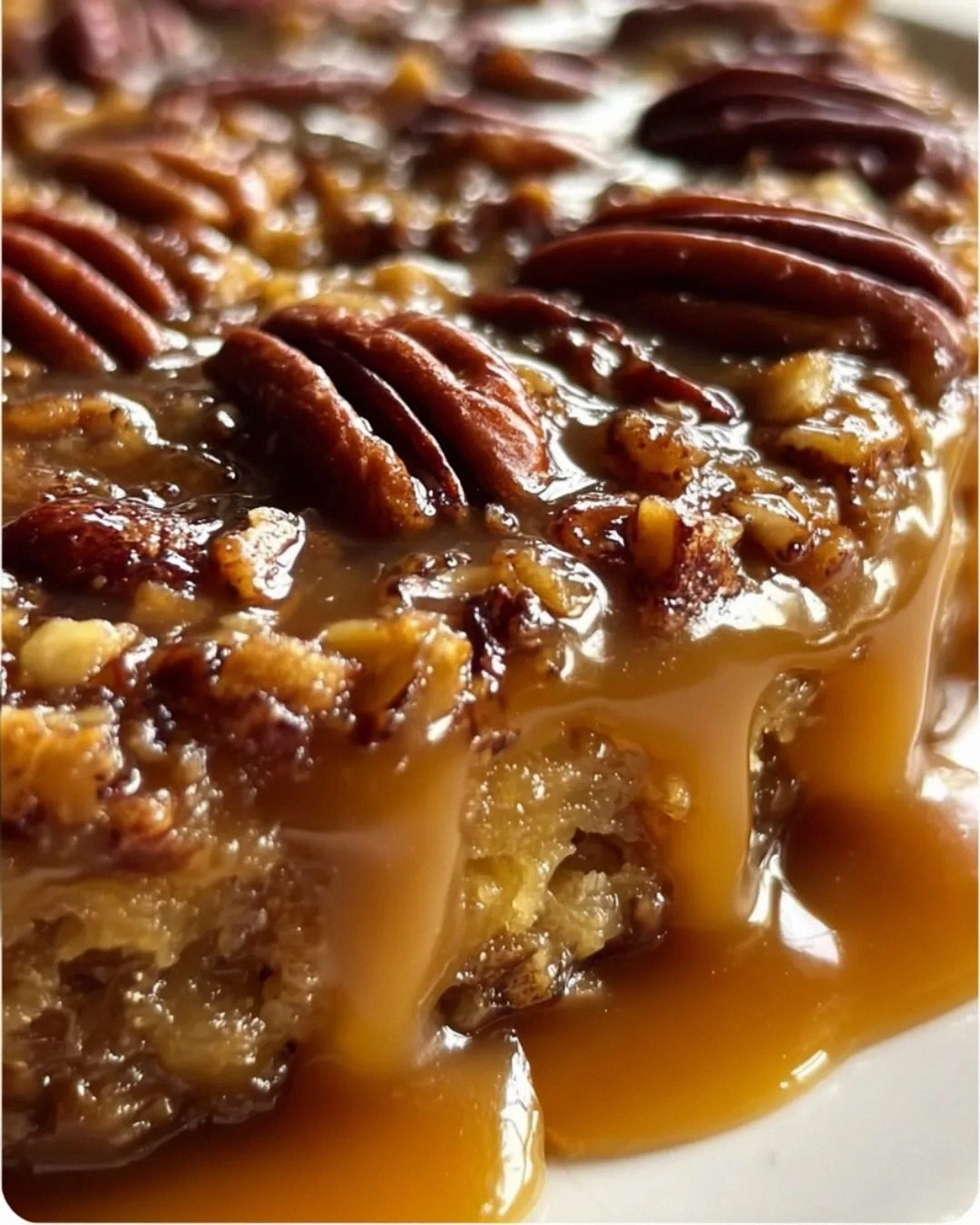
Picture this: the oven door swings open and a golden‑brown crust crackles, releasing a perfume of toasted sugar, butter, and toasted pecans that instantly makes your mouth water. The top is speckled with glossy caramel shards that catch the light like tiny amber jewels, while the interior stays soft, almost custardy, with a crumb that melts on the tongue. When you slice into it, the edges pull away in perfect, slightly crisp ribbons, and the middle stays gooey enough to scoop with a spoon, yet firm enough to hold its shape. That contrast—crunchy, silky, sweet, and buttery—creates a sensory fireworks display that makes you want to shout, “I dare you to taste this and not go back for seconds!”
Most dump‑cake recipes I’ve tried either end up soggy or taste like a bland, sweet pancake. This version, however, flips the script by layering a caramel‑pecan topping before the batter even hits the pan, allowing the sugars to caramelize while the cake rises. The secret? A splash of vanilla and a pinch of salt that cut through the sweetness, turning what could be cloying into a balanced, comforting dessert. I’ll be honest — I ate half the batch before anyone else got a chance to try it, and that’s because the flavor hits you like a warm blanket on a chilly evening.
Okay, ready for the game‑changer? I’m going to walk you through every single step, from picking the right pecans to mastering that caramelized crust. By the end, you’ll wonder how you ever made a dump cake any other way, and you’ll have a go‑to dessert that can turn any gathering into a celebration. Let’s dive in, because this next part? Pure magic.
What Makes This Version Stand Out
- Caramel Depth: A blend of brown sugar and condensed milk creates a buttery caramel that seeps into every crumb, giving the cake a rich, almost toffee‑like finish.
- Nutty Crunch: Freshly chopped pecans are toasted before they hit the oven, so each bite delivers a satisfying snap that contrasts beautifully with the soft interior.
- One‑Pan Simplicity: No mixing bowls, no separate batters—just dump, spread, and bake. It’s the ultimate shortcut for busy hosts who still want to impress.
- Flavor Balance: A dash of vanilla and a whisper of salt cut through the sweetness, preventing the dessert from feeling cloying and keeping the palate happy.
- Crowd‑Pleaser Factor: The glossy, caramelized top looks Instagram‑ready, while the familiar taste of pecan pie makes it instantly recognizable and comforting.
- Make‑Ahead Potential: You can assemble the cake a day ahead, refrigerate it, and bake it fresh when guests arrive, saving you precious party prep time.
- Ingredient Accessibility: All components are pantry staples—no exotic spices or hard‑to‑find nuts, just the classic Southern trio of pecans, butter, and brown sugar.
- Versatile Serving: Serve warm with vanilla ice cream, a dollop of whipped cream, or even a drizzle of bourbon‑infused caramel for a grown‑up twist.
Inside the Ingredient List
The Flavor Base
The star of the show is the sweetened condensed milk, a thick, honey‑like liquid that brings instant richness without the need for extra sugar. It pairs perfectly with the brown sugar, which adds a deep molasses note that you just can’t get from white sugar. If you ever skip the condensed milk, you’ll end up with a cake that’s sweet but flat—nothing to write home about. For a dairy‑free twist, swap the condensed milk for a coconut‑milk‑based sweetened condensed alternative; the flavor shifts subtly toward tropical, but the caramel still forms beautifully. When choosing the cake mix, go for a classic yellow; its buttery vanilla undertones complement the pecan‑pie vibe without overpowering it.
The Texture Crew
Butter is the silent hero that binds everything together, turning the dry cake mix into a moist, tender crumb. Melt it fully before pouring it over the dry ingredients; this ensures even distribution and prevents pockets of dry flour. The pecans provide that essential crunch—if you use pre‑roasted, you might lose some of the toasty aroma that fresh toasting gives. For a nuttier profile, try using a mix of pecans and walnuts; the latter adds a slightly bitter edge that balances the sweetness. Remember, the more finely you chop the nuts, the more they integrate into the caramel, creating a marbled effect.
The Unexpected Star
A splash of vanilla extract is the secret whisper that lifts the entire dessert. It’s easy to overlook, but without it the caramel can taste one‑dimensional. Salt, even just a quarter‑teaspoon, is another unsung hero; it accentuates the sweetness and brings out the buttery notes. If you’re feeling adventurous, a pinch of smoked paprika can add an unexpected depth, turning the flavor profile into something you’ll remember long after the last bite. This is the part where most recipes get it completely wrong—leaving out these tiny ingredients makes the whole cake feel bland.
The Final Flourish
A drizzle of maple syrup on top before baking adds an extra layer of complexity, giving the crust a subtle wood‑sycamore aroma that pairs perfectly with the toasted nuts. If you prefer a richer glaze, melt a tablespoon of butter with a spoonful of brown sugar and brush it over the top right before it goes into the oven. This creates a glossy finish that looks as good as it tastes. Finally, a light dusting of flaky sea salt after baking can turn each bite into a sweet‑and‑salty masterpiece—just a pinch, or you’ll end up with a salty disaster.
Everything's prepped? Good. Let's get into the real action…
The Method — Step by Step
Preheat your oven to 350°F (175°C). While the oven warms up, grease a 9×13‑inch baking dish with a thin layer of butter; this prevents the caramel from sticking and adds an extra buttery note to the crust. The moment the butter hits the pan and starts to melt, you’ll hear a soft sizzle that signals the start of something delicious.
In a large mixing bowl, combine the dry cake mix, brown sugar, and a pinch of salt. Toss the mixture lightly to distribute the sugar evenly. Then, spread the dry ingredients evenly across the bottom of the prepared pan, creating a smooth, even layer.
Kitchen Hack: Use the back of a spoon to press the dry mixture down gently; this creates a uniform base that helps the caramel spread evenly during baking.Scatter the chopped pecans over the dry layer, reserving about a quarter cup for the final topping. Make sure the nuts are spread out rather than piled in one spot; this ensures each bite gets a balanced crunch.
In a separate bowl, whisk together the sweetened condensed milk, melted butter, vanilla extract, and optional maple syrup. The mixture should be glossy and thick, resembling a smooth caramel sauce.
Pour the liquid mixture over the pecan‑topped dry ingredients. As it hits the pan, you’ll hear a faint bubbling sound—this is the caramel beginning to meld with the dry base. Use a spatula to gently coax the liquid into the corners, but avoid over‑mixing; the goal is a “dump” effect, not a fully blended batter.
Kitchen Hack: If the caramel seems too thick, whisk in a tablespoon of warm water to loosen it; this prevents dry pockets after baking.Sprinkle the reserved pecans on top, creating a decorative crown. This final layer will toast and become the crunchy, caramel‑glazed crown that makes the cake look like a masterpiece.
Watch Out: Do not over‑bake; the cake continues to set as it cools, and an over‑browned top can become bitter.Slide the pan into the preheated oven and bake for 30‑35 minutes. Around the 20‑minute mark, peek through the oven window—the edges should start pulling away from the sides, and the top will turn a deep amber color with a glossy sheen.
When the timer dings, remove the cake and let it rest on a wire rack for at least 10 minutes. This resting period allows the caramel to thicken slightly, making it easier to slice without the sauce spilling everywhere.
Serve warm, optionally topped with a scoop of vanilla ice cream or a dollop of freshly whipped cream. The contrast of hot caramel and cold cream is the ultimate comfort‑food climax.
That's it — you did it. But hold on, I've got a few more tricks that'll take this to another level, ensuring every slice is picture‑perfect and every bite is unforgettable.
Insider Tricks for Flawless Results
The Temperature Rule Nobody Follows
Never bake a dump cake at a temperature higher than 375°F. The high heat can cause the caramel to scorch before the cake has a chance to rise, leaving a bitter aftertaste. By keeping the oven at 350°F, you give the sugars time to melt slowly, creating that silky, amber glaze we all love. I once tried 400°F after reading a quick tip online; the result was a burnt crust and a soggy interior—lesson learned. Trust the moderate heat, and your cake will develop a uniform, caramel‑kissed top.
Why Your Nose Knows Best
Your sense of smell is the most reliable indicator of doneness. Around the 25‑minute mark, the kitchen should be filled with a buttery, toasted‑nut aroma that feels like a warm hug. If you catch a hint of burnt sugar, pull the cake out immediately and cover it loosely with foil to prevent further browning. This sensory checkpoint beats any timer because ovens can vary by several degrees.
The 5‑Minute Rest That Changes Everything
Allowing the cake to rest for five minutes after removing it from the oven lets the caramel settle and the crumb firm up. During this brief pause, the heat redistributes, and the edges pull away cleanly, making slicing a breeze. Skipping this step often results in a runny top that slides off the plate. Trust me, those five minutes are worth the anticipation.
Pecan Toasting Pro Tip
A quick toast in a dry skillet for 3‑4 minutes before adding the nuts to the pan amplifies their natural oils and brings out a deeper, nuttier flavor. If you’re in a hurry, spread them on a baking sheet and toast under the broiler for 2 minutes, watching closely to avoid burning. The difference is night and day—toast‑ed pecans add a crunch that’s both audible and palpable.
The Secret Ingredient Swap
Swap half of the brown sugar for coconut sugar to introduce a subtle caramel‑like undertone with a hint of tropical earthiness. This swap works especially well if you’re serving the cake with a scoop of coconut ice cream, creating a cohesive flavor story. The color will be slightly darker, but the taste depth is unbeatable.
Creative Twists and Variations
This recipe is a playground. Here are some of my favorite ways to switch things up:
Bourbon‑Infused Elegance
Add 2 tablespoons of good bourbon to the condensed milk mixture before pouring. The alcohol evaporates during baking, leaving behind a warm, caramel‑spiced note that pairs beautifully with the pecans. Perfect for a holiday dinner where you want a grown‑up twist.
Chocolate‑Swirl Delight
Stir ¼ cup of semi‑sweet chocolate chips into the wet mixture. The chocolate melts into ribbons that create a marbled effect, adding a rich, bittersweet contrast to the sweet caramel. Kids love the surprise pockets of chocolate.
Apple‑Cinnamon Fusion
Fold in 1 cup of thinly sliced apples tossed with ½ teaspoon cinnamon and a splash of lemon juice. The apples soften as they bake, releasing a fragrant, autumnal aroma that transforms the cake into a cozy fall centerpiece.
Gluten‑Free Goodness
Replace the yellow cake mix with a gluten‑free vanilla cake mix, and use almond flour for the topping. The texture remains tender, and the almond flavor adds a subtle nuttiness that complements the pecans.
Spiced Pumpkin Variation
Swap half of the condensed milk for canned pumpkin puree and add ½ teaspoon pumpkin pie spice. This creates a pumpkin‑pecan hybrid that’s perfect for Thanksgiving, offering a moist crumb and a fragrant spice profile.
Storing and Bringing It Back to Life
Fridge Storage
Allow the cake to cool completely, then cover it tightly with plastic wrap or foil. Store in the refrigerator for up to 5 days. The caramel will firm up, making slices easier to handle. When ready to serve, warm a slice in the microwave for 30 seconds or reheat the whole pan in a 300°F oven for 10 minutes.
Freezer Friendly
Wrap the cooled cake tightly in a double layer of freezer‑safe parchment and then foil. It freezes well for up to 2 months. To thaw, move it to the fridge overnight, then bake at 325°F for 15‑20 minutes. The caramel revives beautifully, and the texture remains soft.
Best Reheating Method
For the ultimate reheated slice, preheat your oven to 350°F, place a small ramekin of water on the lower rack, and bake the slice on the middle rack for 8‑10 minutes. The steam from the water prevents the cake from drying out, while the top re‑crispes to that perfect caramelized sheen.