It started on a rainy Tuesday, the kind of night when the only thing you want is a warm, comforting dish that can turn a dreary evening into a celebration. I was rummaging through the pantry, half‑expecting to find a forgotten jar of chickpeas and a can of tomatoes, when the light bulb over my stove flickered on and I realized I had the makings of something extraordinary. I dared myself to make a shakshuka that would make even the most seasoned food critic weep with joy, and I couldn't resist the challenge of turning a simple recipe into a masterpiece. Picture the sizzle of garlic in olive oil, the aroma of cumin and smoked paprika rising like a fragrant cloud, the sight of fresh spinach wilting into a velvety green bed beneath the golden eggs. The moment the first egg cracks, the kitchen fills with a savory perfume that makes you forget any lingering doubts about your culinary skills. This version is not just another shakshuka; it’s a bold, flavor‑packed, crowd‑pleasing symphony that will have your friends begging for seconds.
I’m not going to sugarcoat it: I’ve spent years perfecting this recipe, and each tweak was born from a kitchen mishap or a spontaneous ingredient swap. The first time I tried to make a shakshuka, the sauce was watery, the eggs overcooked, and the spinach was limp. I learned that the secret lies in the balance of acidity, heat, and the right timing for adding greens. Now, with this version, the tomato base is thickened by simmering, the spices are toasted to release their full aroma, and the spinach is added just before the eggs pour in, so it retains that bright, fresh bite. The result is a dish that’s rich yet light, smoky yet sweet, and utterly addictive. If you’ve ever struggled to get your shakshuka just right, you’re not alone — and I’ve got the fix.
What sets this recipe apart is not just the ingredients but the process. I’ve discovered that the trick to a perfect shakshuka is to treat the sauce like a slow‑fire stew, letting the tomatoes reduce until they’re almost syrupy before introducing the eggs. The eggs should be cracked into small, even spaces, so they cook uniformly and absorb the tomato flavors. I also add a splash of water to the pan if the sauce becomes too thick, preventing the eggs from sticking. The spinach is folded in at the last minute, giving it a slight wilt that preserves its vibrant color and nutrients. The final touch is a sprinkle of fresh cilantro or parsley, which adds a bright, herbal note that cuts through the richness. With these steps, you’ll find that the dish is not only delicious but also visually stunning.
I dare you to taste this and not go back for seconds. That sizzle when it hits the pan? Absolute perfection. Picture yourself pulling this out of the oven, the whole kitchen smelling incredible, and everyone around the table leaning in to take the first bite. This is hands down the best version you’ll ever make at home. The combination of smoky spices, fresh spinach, and perfectly poached eggs creates a flavor profile that’s both comforting and sophisticated. The next time you’re craving something that feels like a hug in a bowl, remember that this recipe is ready to deliver.
Let me walk you through every single step — by the end, you’ll wonder how you ever made it any other way. I’ve poured my heart into each detail, from the exact measurements to the timing that ensures every egg is cooked to perfection. I’ve also added a few micro‑challenges to keep you on your toes and a few kitchen hacks to make the process smoother. Whether you’re a seasoned chef or a kitchen newbie, this guide will give you confidence and the tools you need to create a dish that’s as beautiful as it is tasty. Stay with me here — this is worth it. The journey from pantry to plate is an adventure, and I’m excited to share every twist and turn with you.
What Makes This Version Stand Out
- Depth of Flavor: The combination of smoked paprika, cumin, and a hint of cayenne creates a layered spice profile that’s both comforting and bold, turning a simple tomato base into a complex, savory sauce.
- Texture Harmony: The eggs are gently poached over the tomato mixture, while the spinach is folded in just before the final simmer, ensuring a silky sauce with a vibrant, slightly crunchy green bite.
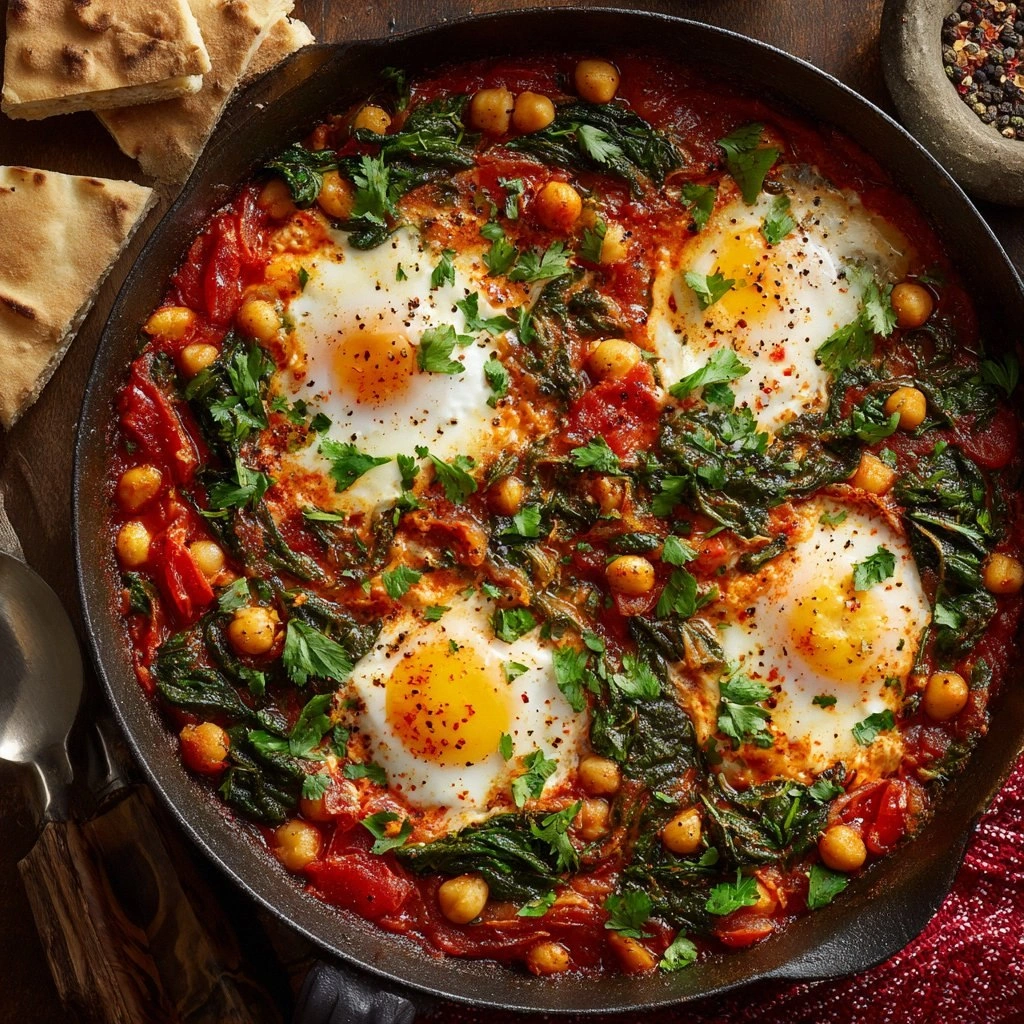
- Visual Appeal: A bright green spinach bed under golden eggs and a sprinkle of fresh herbs gives the dish a color palette that’s as pleasing to the eye as it is to the palate.
- Time Efficiency: With a total cook time of 45 minutes, this shakshuka is perfect for a quick weeknight dinner or a relaxed weekend brunch.
- Ingredient Quality: Using canned chickpeas and diced tomatoes from reputable brands ensures a consistent texture and flavor that you can’t get from fresh ingredients alone.
- Make‑Ahead Potential: The dish can be prepared ahead of time and reheated with a splash of water, making it ideal for meal prep or entertaining guests.
- Versatility: The recipe can be adapted to suit dietary preferences by swapping out the eggs for a plant‑based alternative or adding a protein like grilled chicken.
- Crowd‑Pleaser: The combination of familiar flavors with a subtle twist makes this shakshuka a hit at dinner parties, family gatherings, or casual get‑togethers.
Inside the Ingredient List
The Flavor Base
The foundation of this shakshuka is the tomato and spice mixture. Olive oil is the carrier that brings the aromatics together, while the diced onion and garlic release sweetness and depth. Smoked paprika and cumin are toasted until fragrant, which unlocks their earthy undertones. A pinch of cayenne adds a subtle heat that balances the richness of the eggs. If you prefer a milder version, reduce the cayenne or omit it entirely; the dish will still shine.
The Texture Crew
Chickpeas bring a hearty, nutty texture that complements the silky sauce. Diced tomatoes provide moisture and a slight tang, ensuring the sauce doesn’t dry out during simmering. Eggs are the star, their whites setting into a delicate custard while the yolks remain runny, creating a luscious mouthfeel. Skipping any of these would change the dish’s character: no chickpeas and it becomes a lighter, more tomato‑centric meal; no eggs and it turns into a vegetarian stew.
The Unexpected Star
Fresh spinach is the green that adds color, nutrients, and a subtle earthiness. Adding it too early can cause it to wilt completely, losing its bright hue; adding it just before the eggs finish cooking preserves its vibrancy. If you’re not a fan of spinach, you can swap it for kale or Swiss chard, but keep in mind the cooking time will differ. The spinach’s natural bitterness is tempered by the sweet tomatoes and aromatic spices.
The Final Flourish
Fresh cilantro or parsley provides a bright, herbal finish that cuts through the richness of the eggs and tomato sauce. Crumbled feta adds a salty, tangy contrast that pairs beautifully with the smoky spices. Salt and pepper are essential for balancing flavors, but they should be added gradually to avoid over‑seasoning. A splash of water before reheating keeps the sauce from drying out, giving it a silky finish.
Everything's prepped? Good. Let's get into the real action.
The Method — Step by Step
- Heat the olive oil in a large, deep skillet over medium heat until shimmering. Add the diced onion and sauté until translucent and lightly golden, about 5 minutes. This caramelization builds a sweet base that complements the spices. Keep an eye on the onions; if they start to brown too quickly, reduce the heat slightly. The aroma of onions cooking is a promise of the dish’s depth.
- Stir in the minced garlic and cook for 30 seconds until fragrant, being careful not to let it burn. The garlic should release a warm, aromatic scent without turning bitter. This quick burst of flavor sets the stage for the rest of the spices. If you prefer a milder garlic taste, reduce the amount to one clove.
- Add the smoked paprika, cumin, and cayenne pepper, stirring constantly for 1 minute. Toasting the spices releases their essential oils, deepening the overall flavor. If you’re sensitive to heat, omit the cayenne or reduce it to a pinch. The spices should coat the onion and garlic evenly, creating a fragrant base.
- Pour in the diced tomatoes with their juice, breaking them up with a spoon. Bring the mixture to a gentle simmer and let it reduce for about 10 minutes, or until the liquid has thickened slightly. This reduction concentrates the tomato’s natural sweetness and creates a rich sauce. Stir occasionally to prevent sticking.
- Fold in the chickpeas, stirring gently to coat them in the sauce. Let the mixture simmer for another 5 minutes, allowing the chickpeas to absorb some of the tomato flavor. If the sauce becomes too thick, add a splash of water or vegetable broth. The chickpeas should remain tender but not mushy.
- Create shallow wells in the sauce with a spoon and crack the eggs into each well. Reduce the heat to low, cover the skillet, and let the eggs poach for 8-10 minutes, or until the whites are set but the yolks remain runny. This step is the moment of truth; the eggs must not overcook or the dish will feel dry.
- Add the spinach in the last 2 minutes of cooking, stirring until it wilts but still retains a bright green hue. The spinach should soften quickly, so keep it added close to the end. If you prefer more greens, add a bit more spinach, but be mindful of the cooking time.
- Season the dish with salt and pepper to taste, then sprinkle crumbled feta on top if using. Add fresh cilantro or parsley for a burst of freshness. Let the dish rest for a minute before serving, allowing the flavors to meld. Plate the shakshuka on a warm dish, spooning the sauce and eggs over warm crusty bread or a side of rice.
That's it — you did it. But hold on, I've got a few more tricks that'll take this to another level.
Insider Tricks for Flawless Results
The Temperature Rule Nobody Follows
Many cooks throw everything in at high heat, but this dish thrives on a low, steady simmer. Keeping the heat low during the poaching stage ensures the eggs set evenly without scorching the sauce. If you notice the sauce bubbling too vigorously, reduce the heat or use a lid to trap steam. This small adjustment makes the difference between a perfect, silky sauce and a dry, uneven one.
Why Your Nose Knows Best
Trust your senses: the sauce should smell toasty and slightly sweet, like a Mediterranean sunrise. If the aroma leans too acidic, add a pinch of sugar or a splash of balsamic vinegar to balance it. The freshness of the spinach will be evident in the scent; if it’s too earthy, reduce the amount or cook it slightly longer. Smell is your best judge of readiness.
The 5-Minute Rest That Changes Everything
After the eggs finish poaching, let the dish rest for five minutes uncovered. This allows the flavors to settle and the sauce to thicken slightly, giving the dish a cohesive taste profile. It also lets the eggs finish cooking gently, preventing them from becoming rubbery. A short rest is a small step that yields a big payoff.
The Crumbly Feta Factor
If you love feta, crumble it into small shards rather than a thick block. The smaller pieces melt into the sauce, releasing their salty tang more evenly. If you’re vegan or dairy‑free, try a sprinkle of nutritional yeast for a similar umami boost. The key is to distribute the flavor without overpowering the delicate eggs.
The Fresh Herb Finale
Finish the dish with a generous handful of chopped cilantro or parsley right before serving. The herbs add a bright, almost citrusy note that lifts the heaviness of the tomato and egg. If you’re not a fan of cilantro, try dill or mint for a different aromatic profile. The fresh herbs are the final flourish that completes the dish’s sensory journey.
Creative Twists and Variations
This recipe is a playground. Here are some of my favorite ways to switch things up:
Spicy Chickpea Shakshuka
Add a diced jalapeño or a teaspoon of harissa during the sauté stage for an extra kick. The heat pairs beautifully with the smoky paprika, creating a layered spice profile. Serve with a cooling yogurt dip to balance the heat.
Mediterranean Feta & Olive Edition
Incorporate sliced Kalamata olives and a handful of crumbled feta into the sauce before adding the eggs. The olives bring a briny depth, while the feta adds a creamy tang. This variation feels like a Greek sunset on a plate.
Vegetarian Protein Boost
Replace the eggs with grilled halloumi or tofu cubes. The firm protein absorbs the tomato sauce, offering a hearty, plant‑based alternative. This version is perfect for a vegan gathering or a protein‑rich lunch.
Breakfast Shakshuka with Poached Eggs
Serve the dish over toasted sourdough or a warm bagel. Add a side of fresh fruit or a drizzle of honey for a sweet contrast. This breakfast twist turns the shakshuka into a brunch‑ready delight.
Southwest Fusion
Swap the chickpeas for black beans and add corn kernels. Finish with a sprinkle of cotija cheese and a squeeze of lime. The result is a vibrant, Southwestern‑inspired shakshuka that’s both colorful and flavorful.
Low‑Carb Spinach Shakshuka
Omit the chickpeas and use a handful of chopped zucchini or cauliflower florets instead. This reduces the carb count while maintaining the dish’s comforting essence. Pair with a side of sautéed greens for a complete low‑carb meal.
Storing and Bringing It Back to Life
Fridge Storage
Store the shakshuka in an airtight container for up to 3 days in the refrigerator. The tomato sauce will thicken as it cools, but the eggs may lose some of their poached texture. To revive, add a splash of water or broth and gently reheat on low.
Freezer Friendly
Freeze individual portions in freezer‑safe containers for up to 2 months. When ready to eat, thaw overnight in the refrigerator and reheat on the stovetop with a splash of water to restore the sauce’s consistency. The eggs will firm up slightly, but the flavor remains intact.
Best Reheating Method
Reheat the dish over low heat, stirring occasionally to prevent sticking. Add a tablespoon of water or broth to loosen the sauce and bring it back to a silky state. Finish with a fresh sprinkle of herbs before serving to restore the bright, aromatic finish.