I was standing in my kitchen, the kind of kitchen that smells like yesterday’s garlic and ambition, when my roommate challenged me: “Make something that screams keto but still feels like a cheat day.” I laughed, tossed a steak into the pan, and accidentally knocked a whole spaghetti squash onto the floor. It rolled like a mischievous bowling ball, and that clatter sparked the wildest idea of my culinary career. I dared myself to turn that disaster into a masterpiece, and the result? A dish so decadent it makes traditional alfredo look like a bland sidekick.
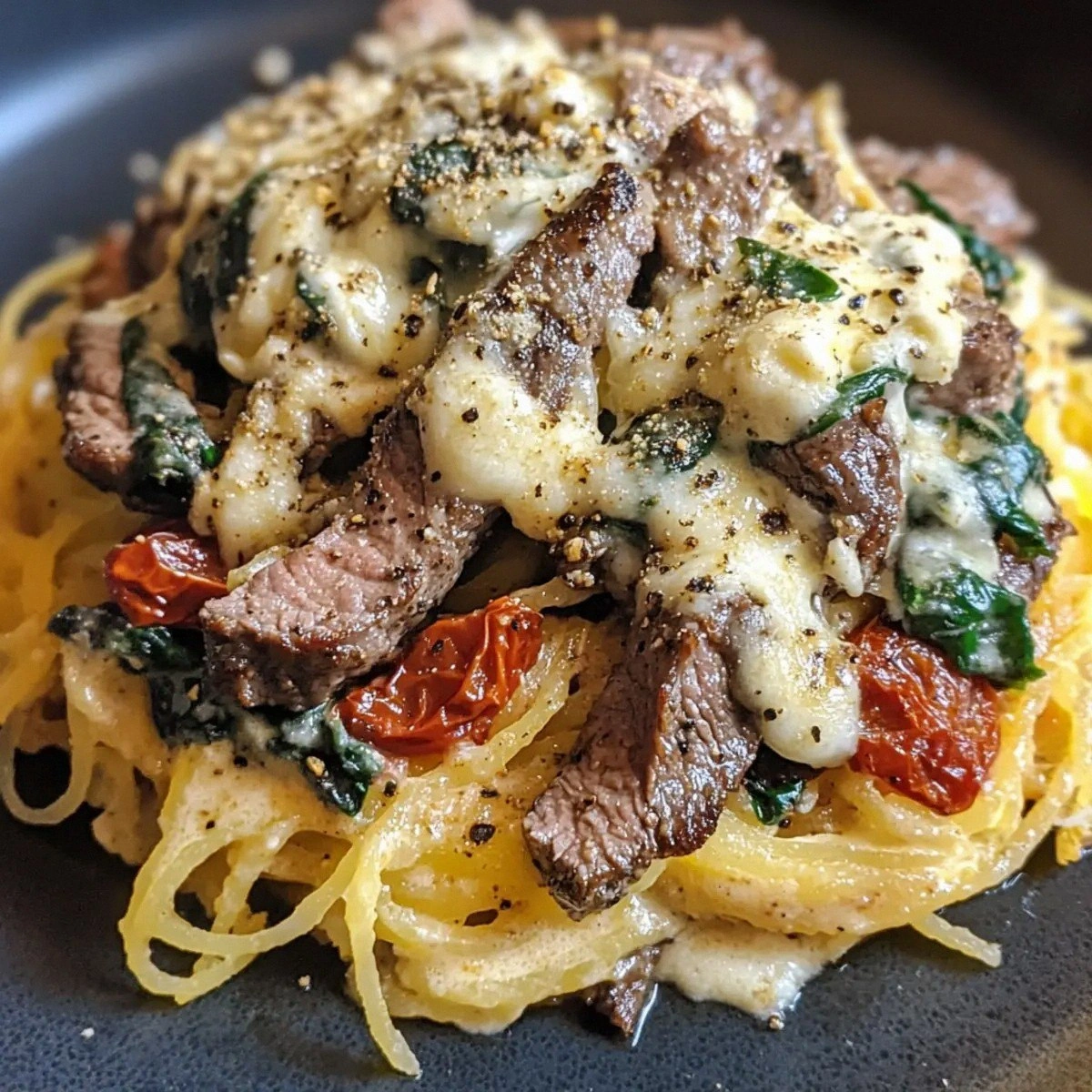
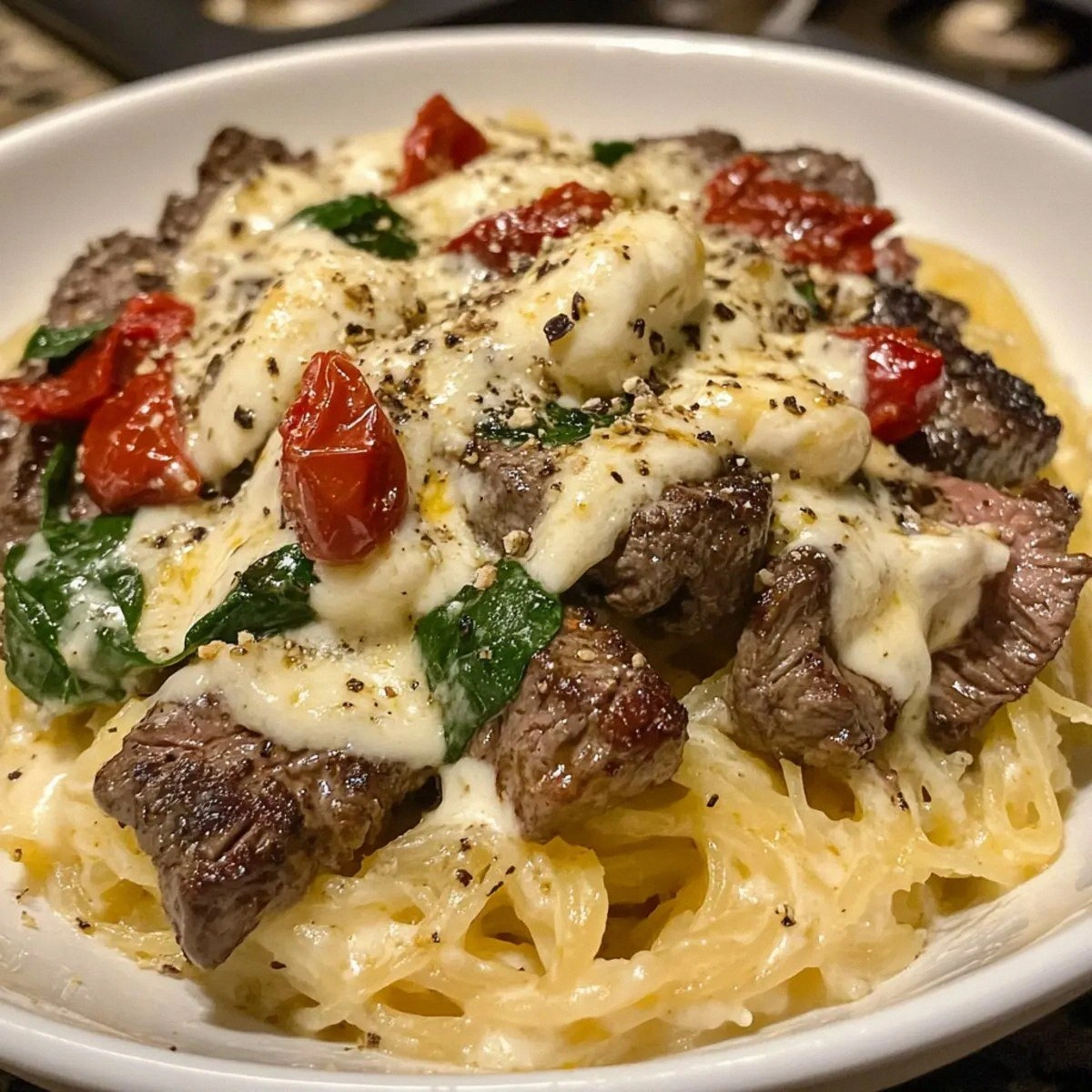
Picture this: a golden-brown steak, seared to perfection, its juices caramelizing like a sweet sunrise. The spaghetti squash, roasted until its strands are tender yet still hold a slight bite, acts as a low‑carb noodle that soaks up every drop of sauce. Then comes the sauce—an indulgent swirl of heavy cream, butter, and Gorgonzola that clings to the squash like velvet, while mozzarella stretches in gooey ribbons. The aroma? A heady mix of nutmeg, toasted butter, and the faint tang of sundried tomatoes that makes your nostrils do a happy dance.
What makes this version truly stand out is the bold marriage of steak and gorgonzola. Most keto alfredo recipes shy away from meat, fearing the sauce will get overwhelmed. Not this one. The steak’s savory depth cuts through the creamy richness, creating a flavor symphony that hits all the right notes. And the spinach—both frozen and fresh—adds a pop of color and a subtle earthiness that balances the richness without adding carbs. This isn’t just a dinner; it’s a culinary adventure that proves you don’t have to sacrifice taste for low‑carb living.
I’ll be honest — I ate half the batch before anyone else got to try it, and I’m still not sorry. The secret? A pinch of ground nutmeg that whispers through the sauce, a dash of vegetable oil that helps the steak sear without burning, and a strategic timing trick that ensures the squash never gets soggy. I dare you to taste this and not go back for seconds. Ready for the game‑changer? Let me walk you through every single step — by the end, you’ll wonder how you ever made it any other way.
What Makes This Version Stand Out
- Flavor Explosion: The combination of Gorgonzola and Parmesan creates a cheese profile that’s both sharp and buttery, while the steak adds a meaty umami punch that most low‑carb alfredos lack.
- Texture Harmony: The squash strands give you that satisfying bite of pasta, the butter‑rich sauce coats everything like silk, and the steak’s crisp edges add a delightful crunch.
- Simplicity: Despite the gourmet vibe, the recipe uses pantry staples and a few fresh ingredients, making it approachable for even novice cooks.
- Unique Ingredient Twist: Adding both frozen and fresh spinach layers flavor and color, and the sundried tomatoes bring a sweet‑tart contrast that most keto dishes miss.
- Crowd‑Pleaser: Whether you’re feeding a keto‑curious friend or a meat‑loving family, this dish gets rave reviews and often disappears before the last bite.
- Ingredient Quality: Using a well‑marbled steak and high‑quality Gorgonzola ensures every mouthful feels luxurious, not cheap.
- Cooking Method: The two‑stage sear for the steak locks in juices, while the oven‑roasted squash prevents sogginess, a common pitfall in low‑carb pasta alternatives.
- Make‑Ahead Potential: You can prep the squash and sauce ahead of time, then finish the steak just before serving for a stress‑free dinner.
Inside the Ingredient List
The Flavor Base
The heavy cream and unsalted butter are the backbone of any alfredo sauce, providing that luscious, buttery mouthfeel. Heavy cream’s high fat content prevents the sauce from curdling when you add the cheese, while butter adds a glossy sheen that makes the dish look restaurant‑ready. If you skip the butter, you’ll lose that buttery sheen and the sauce may feel a bit thin. As a swap, you could use ghee for an even richer flavor, but keep the butter for that classic alfredo silk.
The Texture Crew
Spaghetti squash is the star of the low‑carb show. When roasted, its flesh separates into noodle‑like strands that hold sauce beautifully. If you opt for a different low‑carb noodle, zucchini spirals work, but they release more water, which can dilute the sauce. Choose a firm, deep‑orange squash; the brighter the flesh, the sweeter the flavor after roasting.
The Unexpected Star
Gorgonzola crumbles bring a bold, tangy depth that most alfredos lack. This blue cheese adds a pungent bite that cuts through the richness of the cream, creating a balanced palate. If you’re not a fan of blue cheese, substitute with a strong aged cheddar, but you’ll miss that signature tang. A tip: crumble the Gorgonzola just before adding it to the sauce so it melts evenly without clumping.
The Final Flourish
Freshly grated Parmesan and mozzarella add layers of cheesy goodness. Parmesan offers a sharp, nutty edge, while mozzarella provides meltiness and stretch. Skipping the mozzarella will make the sauce less gooey, and using pre‑grated cheese can introduce anti‑caking agents that affect texture. For a dairy‑free twist, swap the cheeses with nutritional yeast and a dairy‑free melt, but you’ll lose the authentic Italian cheese experience.
Everything's prepped? Good. Let's get into the real action...
The Method — Step by Step
Preheat your oven to 400°F (200°C). While the oven warms, cut the spaghetti squash in half lengthwise, scoop out the seeds, and drizzle the flesh with a tablespoon of vegetable oil, a pinch of salt, and a grind of black pepper. Place the halves cut‑side down on a parchment‑lined baking sheet. Roast for 35‑40 minutes, or until the flesh is fork‑tender and the edges start to caramelize. That sizzle when it hits the pan? Absolute perfection.
Kitchen Hack: Flip the squash halves halfway through roasting for even browning and to prevent the bottom from steaming.While the squash roasts, season the steak generously with salt, black pepper, and a light dusting of ground nutmeg. Heat a cast‑iron skillet over medium‑high heat, add a tablespoon of vegetable oil, and wait until the oil shimmers. Place the steak in the pan and let it sear undisturbed for 3‑4 minutes per side for medium‑rare, or longer to your preferred doneness. You’ll hear a satisfying crackle that tells you the crust is forming. Once done, transfer the steak to a cutting board and let it rest for at least five minutes; this keeps the juices locked in.
Watch Out: Overcrowding the pan will steam the steak instead of searing it. If your skillet feels cramped, sear the steak in batches.Slice the rested steak into thin strips, about a quarter‑inch thick. This not only makes it easier to eat with the squash noodles but also distributes the meat’s flavor throughout the dish. Set the strips aside, and keep the pan on low heat—you’ll reuse it for the sauce, which means every browned bit stays in the mix.
In the same skillet, melt 8 tablespoons of unsalted butter over medium heat. Once the butter foams, add the frozen spinach and let it wilt, stirring occasionally. The frozen spinach releases moisture, which is why we add the fresh spinach later to keep the sauce from becoming watery. When the frozen spinach is mostly collapsed, stir in 0.75 cups of fresh spinach and let it wilt for another minute. The greens should turn a deep, glossy green.
Now, pour in 2 cups of heavy cream, stirring constantly. Bring the mixture to a gentle simmer—don’t let it boil, or you risk curdling. As the cream thickens, sprinkle in 0.25 teaspoon of ground nutmeg; this subtle spice adds a warm undertone that elevates the sauce. Reduce the heat to low and gradually whisk in 1.5 cups of freshly grated Parmesan cheese until smooth.
Add the 4 ounces of Gorgonzola crumbles, letting them melt into the sauce, creating those beautiful blue‑veined ribbons. Then stir in 0.25 cups of sundried tomatoes, which will rehydrate slightly and release a sweet‑tart burst. Finally, fold in 1 cup of shredded mozzarella cheese; watch it stretch and become gooey, binding the sauce together. The sauce should coat the back of a spoon like silk—if it looks too thin, let it simmer a minute longer.
Kitchen Hack: If the sauce gets too thick, whisk in a splash of water or extra cream to reach your desired consistency.While the sauce is reaching its final velvety stage, use a fork to scrape the roasted spaghetti squash flesh into strands. Transfer the strands to a large mixing bowl, drizzle with a tiny drizzle of olive oil, and toss gently to prevent clumping. The squash should be warm but not hot enough to melt the cheese prematurely.
Combine the squash strands, steak strips, and creamy sauce in the skillet or a large sauté pan. Toss everything together over low heat for just 2‑3 minutes, ensuring every strand is drenched in sauce and the steak stays tender. Taste and adjust seasoning with salt and black pepper—remember, the cheese already brings saltiness, so go light.
Serve immediately on warm plates, garnishing with a sprinkle of extra Parmesan, a few crumbles of Gorgonzola, and a fresh grind of black pepper. Picture yourself pulling this out of the oven, the whole kitchen smelling incredible, and the first bite delivering that perfect balance of creamy, meaty, and slightly tangy. That moment? Pure magic.
That's it — you did it. But hold on, I've got a few more tricks that'll take this to another level...
Insider Tricks for Flawless Results
The Temperature Rule Nobody Follows
Never let the sauce boil. A gentle simmer keeps the emulsion stable, preventing the cream from splitting. I once tried to speed things up by cranking the heat, and the sauce turned grainy—like cheap cheese sauce you’d find in a frozen dinner. Keep the temperature low and stir constantly; the sauce will thicken naturally and stay silky.
Why Your Nose Knows Best
Your nose is the ultimate doneness detector. When the steak hits the pan, listen for that initial sizzle; it means the Maillard reaction is happening. Later, when the sauce starts to emit a nutty, buttery aroma, you know it’s reaching the perfect thickness. Trust those sensory cues over a timer, and you’ll consistently nail the texture.
The 5‑Minute Rest That Changes Everything
After searing, let the steak rest for at least five minutes. This short pause lets the muscle fibers relax and re‑absorb the juices. Skipping this step results in a dry steak that saps the sauce of its richness. While the steak rests, you can finish the sauce, so the overall timeline stays efficient.
Butter‑First, Then Cream
Melting butter before adding cream creates a flavor base that coats the pan, preventing the cream from scorching. It also adds a subtle nutty depth that you won’t get if you pour cream directly into a hot pan. This is a subtle hack that makes the sauce taste like it’s been simmered for hours.
Spinach Layering Technique
Using both frozen and fresh spinach gives you the best of both worlds: frozen spinach provides bulk without extra water, while fresh spinach adds bright color and a fresh bite. If you only use frozen, the sauce can become watery; if you only use fresh, you’ll need to cook longer, risking over‑cooking the squash. The combo keeps the dish balanced.
Creative Twists and Variations
This recipe is a playground. Here are some of my favorite ways to switch things up:
Smoky Chipotle Kick
Add a teaspoon of chipotle in adobo sauce to the cream mixture for a smoky, slightly spicy undertone. The heat pairs beautifully with the richness of the cheese and the sweet notes of the squash. Perfect for those who love a little fire.
Mediterranean Spin
Swap the Gorgonzola for crumbled feta and toss in a handful of Kalamata olives. The salty, briny flavor transforms the dish into a Mediterranean-inspired feast, while the olives add a pleasant bite.
Pesto Infusion
Stir in two tablespoons of basil pesto right before serving. The herbaceous green notes brighten the sauce, and the pine nuts in the pesto add a subtle crunch that complements the steak’s texture.
Garlic‑Lover’s Dream
Sauté minced garlic in the butter before adding the spinach. The aromatic base deepens the flavor profile and gives the sauce an extra layer of richness that garlic fans will adore.
Low‑Carb “Pasta” Swap
If you’re not a fan of squash, use shirataki noodles instead. Rinse them well, dry them thoroughly, and toss them in the sauce just as you would the squash strands. The texture changes, but the sauce remains the star.
Storing and Bringing It Back to Life
Fridge Storage
Place leftovers in an airtight container and refrigerate for up to three days. The sauce may thicken as it cools; simply reheat gently over low heat, adding a splash of heavy cream or water to restore its silky texture.
Freezer Friendly
This dish freezes beautifully. Portion into freezer‑safe bags or containers, removing as much air as possible. Freeze for up to two months. When ready to eat, thaw overnight in the fridge, then reheat on the stove, again adding a little liquid to revive the sauce.
Best Reheating Method
Reheat in a skillet over medium‑low heat, stirring constantly. Add a tablespoon of water or extra cream before you start; the steam will bring the sauce back to life without turning it grainy. Avoid microwaving, as it can cause the cheese to separate.