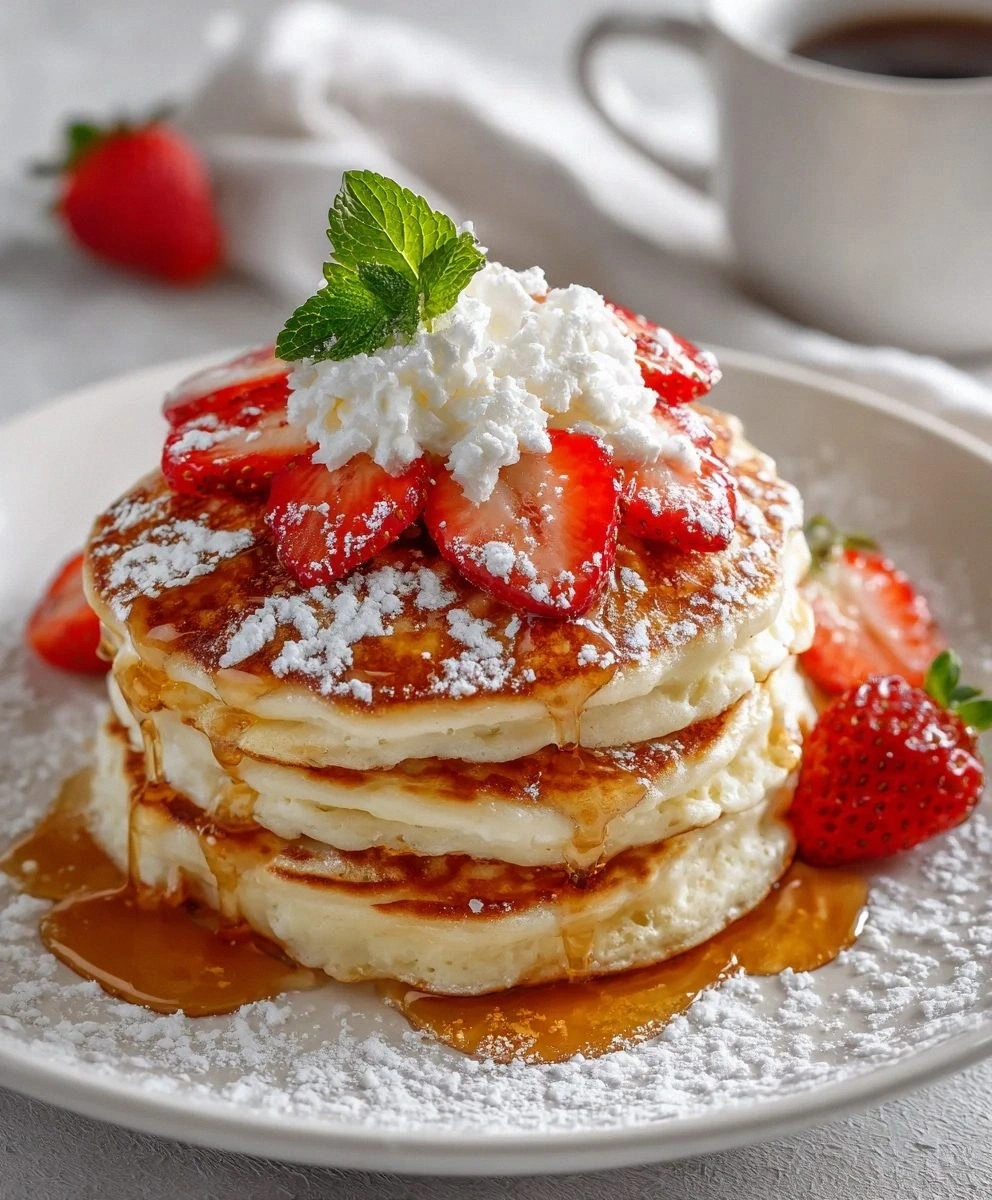
It was a rainy Saturday morning when I found myself staring into an almost-empty fridge, desperately craving something that would feel like a warm hug on a plate. The butter was gone, the milk had turned suspiciously chunky, and all that remained was a tub of cottage cheese that was about to expire. Most people would sigh, pour a bowl of cereal, and call it a day. But I am not most people, and I was about to stumble onto something that would change my breakfast game forever. What started as a desperate attempt to use up dairy turned into the fluffiest, most cloud-like pancakes I have ever pulled from a skillet. The edges crisped like thin ice cracking underfoot, while the insides stayed so tender they practically sighed when I cut them open. The first bite tasted like someone had folded sunshine into a protein bar and told it to behave.
The smell alone made my roommate materialize in the doorway like a cartoon ghost floating toward a pie. I hadn’t even plated them yet and she was already reaching for the maple syrup, which I swatted away because these beauties deserved a moment of silence first. You know that feeling when you expect something to be “good enough” and it turns out to be so good you involuntarily close your eyes? That happened. I ate half the batch standing at the counter, spatula still in my other hand, rain tapping the window like it was jealous. Confession time: I told her I was “taste-testing for safety” while stacking the rest onto a secret plate behind the coffee maker. She still thinks the recipe only yields six pancakes. In reality it makes twelve, and I have zero regrets.
Here is why you should care: most cottage-cheese pancake recipes are rubbery, bland pucks that taste like someone punished breakfast for existing. They lean too hard on the cottage cheese and forget that pancakes are supposed to be, well, pancakes. This version keeps the tangy richness but treats it like a supporting actor, letting the flour and leavening agents do what they were born to do—rise, puff, and flirt with golden perfection. The result is a stack that looks like it belongs on a brunch billboard but secretly carries enough protein to keep you full until dinner. Picture yourself pulling these off the griddle, steam curling up, the edges so light they practically hover above the plate. Ready for the game-changer? Stay with me here—this is worth it.
Let me walk you through every single step—by the end, you will wonder how you ever made it any other way.
What Makes This Version Stand Out
- Cloud-Level Fluff: The batter whips up like latte foam thanks to a strategic cornstarch lift and baking-powder double act. You will watch them rise in real time and question the laws of physics.
- Hidden Protein: Each pancake sneaks in more protein than an egg without tasting like a gym membership. You can skip the chalky powder shakes and still crush your macros.
- One-Bowl Wonder: No separating eggs, no overnight rests, no fancy equipment. If you own a whisk and a bowl, you are officially overqualified.
- Texture Theater: Crispy lace edges contrast with interiors so tender they fold like silk scarves. Every bite is a conversation between crunch and cream.
- Blank-Canvas Flavor: Tangy cottage cheese sets a neutral stage so maple, berries, lemon zest, or even chocolate chips can headline without clashing.
- Make-Ahead Magic: They reheat like champs on busy mornings—pop into a toaster and they spring back to life, no sad-soggy microwaved casualties.
- Crowd Hypnosis: Serve these at a brunch and watch people lose their manners, stacking three high before they have even said good morning.
Alright, let’s break down exactly what goes into this masterpiece...
Inside the Ingredient List
The Flavor Base
Cottage cheese is the unlikely hero here, and not all tubs are created equal. Full-fat delivers a cheesecake-like richness, while low-fat keeps things light and springy. I have tested both, and honestly, each has moods: full-fat for weekend indulgence, low-fat for weekday redemption. The curds melt during cooking, leaving pockets of moisture that translate to fluffy interiors. Skip the no-fat version—your pancakes will taste like regret and cardboard had a baby. When shopping, look for one with short ingredients: milk, cream, salt, enzymes. If the label reads like a chemistry textbook, slide it back onto the shelf and walk away.
The Texture Crew
Rolled oats are the secret scaffolding. They soak up liquid, swell, and give the batter body without turning it into cement. Blitz them briefly if you want silk-smooth cakes, or leave them whole for a rustic chew that says “I hike on weekends.” Cornstarch is the silent partner that cuts gluten formation, giving you tenderness that rivals cake flour. Baking powder is your lift ticket—make sure it is fresh; if the canister has been lurking since last year, toss it and spare yourself flat frisbees. A tiny pinch of salt wakes everything up, the culinary equivalent of turning on the lights after a dim dinner party.
The Unexpected Star
Eggs do the heavy binding, but the real trick is temperature. Room-temp yolks emulsify faster, creating a batter that looks like thick paint instead of lumpy porridge. Vanilla extract is non-negotiable; it rounds the tang and convinces skeptics they are eating dessert for breakfast. If you are out, swap in almond extract for a cherry-vibe twist that makes people ask, “What is that mysterious flavor?”
The Optional Glitter
Honey or maple syrup in the batter adds caramel notes that bloom under heat. Cinnamon brings cozy warmth, but nutmeg or cardamom can crash the party if you are feeling dramatic. Butter in the skillet gives nutty brown edges, while neutral oil is your insurance policy against burnt milk solids. Choose your fighter based on how much dish-washing guilt you can handle.
Everything’s prepped? Good. Let’s get into the real action...
The Method — Step by Step
- Crack the eggs into a large bowl and whisk like you are beating a bad mood out of them—thirty seconds should turn them pale and frothy. This is your aeration foundation; the more air you trap now, the higher your pancakes rise later. Slide in the cottage cheese and vanilla, and whisk until the mixture looks like creamy ranch dressing with freckles. Don’t panic about the curds; they melt into dreamy pockets later.
- In a separate container, shake together the oats, cornstarch, baking powder, salt, and cinnamon if using. Think of this as your dry team huddle. Pour this into the wet bowl and fold with a spatula until you see no dry flour streaks. The batter will be thick and slightly lumpy—like quilted velvet—and that is perfect. Overmixing activates gluten and turns your cloud cakes into shoe leather.
- Let the batter nap for five minutes. This is not optional; oats need a moment to drink up moisture so your pancakes don’t spread like sad puddles. While you wait, heat a non-stick or cast-iron skillet over medium-low. You want a gentle sizzle when the batter hits, not a violent sear that burns before it cooks through.
- Drop a pea-sized bit of butter onto the pan; if it foams and smells like hazelnuts, you are in the sweet spot. Wipe away excess with a paper towel, leaving only a whisper of fat. Too much butter fries the edges dark and masks the delicate cottage-cheese tang. This next part? Pure magic.
- Scoop a quarter-cup of batter per pancake, spacing them like polite commuters on a subway—close but not touching. Resist patting them down; let them rise on their own. After two to three minutes, the edges will set and tiny bubbles will appear on the surface. That sizzle when it hits the pan? Absolute perfection.
- Slide a thin spatula under and peek: once the underside is mottled gold like a toasted marshmallow, flip with confidence. The second side needs only sixty to ninety seconds. Pressing with the spatula is a crime; you will squeeze out the steam that keeps them lofty. Transfer to a warm plate and repeat, regreasing the pan only when the sheen looks dry.
- Stack them as high as your courage allows—three is polite, six is heroic. Drizzle with maple syrup, add a pat of butter, or go rogue with lemon curd and berries. Serve immediately while the edges still crackle. And now the fun part: watch your diners fall silent, the highest compliment breakfast can receive.
That’s it—you did it. But hold on, I’ve got a few more tricks that’ll take this to another level...
Insider Tricks for Flawless Results
The Temperature Rule Nobody Follows
Most home cooks crank the burner to medium-high because they are impatient. Resist. Low-medium heat allows the baking powder to release carbon dioxide gradually, puffing the cakes instead of scorching them. If you see smoke, you have already lost; toss that test cake to the dog and start over. Your patience will be rewarded with interiors that look like spun silk.
Why Your Nose Knows Best
When the batter hits the pan, it should smell like warm custard and toasted oats. If you catch a whiff of singed flour, the heat is too high. Trust the aroma more than the clock; every stove has hot spots and mood swings. I once rented an Airbnb where “medium” meant “surface of the sun,” and my nose saved the batch.
The 5-Minute Rest That Changes Everything
After mixing, let the batter sit covered on the counter. Oats hydrate, starches swell, and bubbles stabilize, meaning your pancakes rise higher and crack less. A friend tried skipping this once—let’s just say it didn’t end well. Her cakes spread into lace doilies and she still blames me for the “bad recipe.” Don’t be that friend.
The Flip Cue Everyone Misses
Wait until the bubbles on top pop and leave tiny craters that don’t refill with wet batter. That is the green light. Flip earlier and you get gluey centers; flip later and you get rubber. I set a timer for exactly 2:30 on my stove, but yours may vary—watch the craters, not the seconds.
Creative Twists and Variations
This recipe is a playground. Here are some of my favorite ways to switch things up:
Blueberry Cheesecake Stack
Fold a handful of frozen blueberries into the batter right before cooking. They burst into jammy pockets that mimic cheesecake swirls. Top with a drizzle of honey and a dusting of graham-cracker crumbs for full diner vibes.
Lemon-Poppy Zing
Add a teaspoon of lemon zest and a tablespoon of poppy seeds. The citrus lifts the tang of the cottage cheese while the seeds crackle like tiny fireworks. Serve with lemon curd instead of syrup for a brunch that tastes like sunshine wearing sunglasses.
Chocolate Chip Clouds
Mini chips melt faster and disperse like freckles. Use dark chocolate to keep things sophisticated, or go milk if you want nostalgic fluffernutter energy. A tiny pinch of flaky salt on top makes the chocolate sing opera.
Savory Herb Flip
Omit the sweeteners and cinnamon, then fold in chopped chives, cracked pepper, and a handful of grated sharp cheddar. Serve alongside fried eggs and smoked salmon for a breakfast that thinks it is lunch.
Pumpkin Spice Autumn
Swap the cinnamon for pumpkin-pie spice and add two tablespoons of canned pumpkin. The pancakes turn sunset-orange and taste like October even in July. Maple pecans on top are optional but highly encouraged if you like applause.
Coconut Dream
Sub half the oats with unsweetened shredded coconut and use coconut milk if the batter feels thick. Toast extra coconut in a dry pan until golden and sprinkle like snow. You will feel like you are eating a tropical cloud.
Storing and Bringing It Back to Life
Fridge Storage
Cool the pancakes completely on a wire rack so steam doesn’t turn them soggy. Stack in an airtight container with parchment between layers; they will keep four days. Reheat in a toaster on medium for two minutes—microwaves steam them into sadness, so avoid unless you enjoy rubber Frisbees.
Freezer Friendly
Flash-freeze on a baking sheet until solid, then toss into a zip bag with the air sucked out. They survive two months without freezer burn. Pop straight into the toaster from frozen; add an extra thirty seconds and they emerge like fresh recruits.
Best Reheating Method
Place pancakes on a wire rack set over a baking sheet in a 350 °F oven for five minutes. They heat evenly and regain crisp edges. Add a tiny splash of water on the pan beneath to create steam; it revives the interiors without drying them out.